


Feds eye Grays Bay as project of ‘national interest’
Proposed western road and port for Nunavut among 3 projects that could be the first to receive key designation
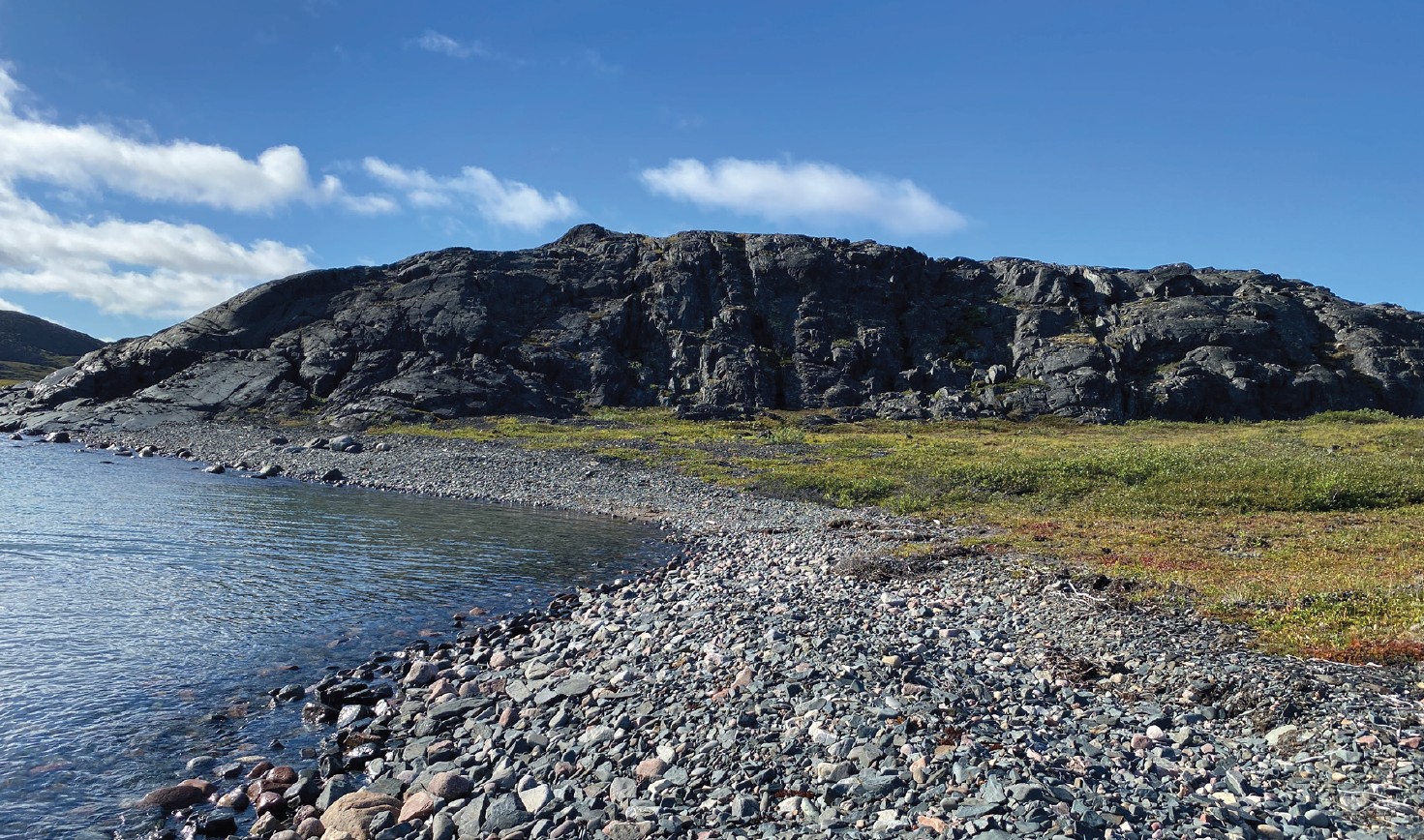
The federal government is moving toward recognizing the proposed Grays Bay road and port as a project of “national interest.” (Photo courtesy of West Kitikmeot Resources Corp.)

The proposed Grays Bay road and deepsea port in western Nunavut could be among the first to be classified as a project of national interest, says federal Transportation Minister Steven MacKinnon.
MacKinnon was in Yellowknife Wednesday to announce Grays Bay, alongside the proposed Mackenzie Valley Highway in N.W.T. and the Nuclear Waste Management Organization’s Deep Geological Repository in northern Ontario, as projects being eyed for this designation.
“Grays Bay is an essential and very central project to, not just the North, but to the kind of vision that the prime minister and our government have for our country,” MacKinnon said, speaking to reporters alongside Natural Resources Minister Tim Hodgson, Crown-Indigenous Relations Minister Rebecca Alty and Northwest Territories Premier R.J. Simpson.
Nunavut Premier John Main and Community Services Minister Craig Simailak were in attendance as well but did not speak as part of the event.
Prime Minister Mark Carney created the Major Projects Office in August 2025 under the Building Canada Act to usher projects deemed to be of national interest through the federal regulatory process.
Once a project receives this designation the regulatory focus changes from “whether” a project should proceed to “how” it will proceed, says backgrounder from the federal government on Wednesday’s announcement.
Projects of national interest must fit a criteria set by the federal government. The project must strengthen Canada’s autonomy, resilience and security; provide economic or other benefits to the country; advance the interests of Indigenous Peoples; and contribute to meeting Canada’s climate change objectives.

The proposed Grays Bay project – West Kitikmeot Resources Corp.’s $1-billion, 230-kilometre road and Arctic deepsea port – will “improve access to global markets, support responsible resource development, and strengthen the infrastructure needed to foster economic growth and prosperity across the North,” Mackinnon said.
There is also consultation process outlined in the Build Canada Act that must be completed before designation, but MacKinnon didn’t specify when that might happen.
While referring to Grays Bay as an “incredibly central and strategic project,” the minister said it is subject to “joint” federal, territorial and community governance processes as well.
The project is awaiting approval from the Nunavut Impact Review Board. That process has just begun, after the review board accepted an impact statement for Grays Bay in May.
West Kitikmeot Resources Corp. CEO Brendan Bell says he feels “blessed” that his project is among the first up for a national interest designation.
“I think it demonstrates that the prime minister has certainly heard northern leadership, both on Mackenzie Valley and on Grays Bay, and intends to move forward and aggressively proceed with these projects,” he said.

Earning that designation is entirely the federal government’s decision, Bell said.
“This is encouraging today and maybe gives us some hope that we can start sooner,” Bell said.
Wednesday’s announcement came with no funding promises.
The plan is to start construction of the estimated $1-billion road and port by 2029.
Main, through his office, declined to comment on the announcement.

National interest ? By whom ? For a road that goes nowhere but to mineral dqposits owned by China. If it went to nearby Kugluktuk it would have brought benefits for the people, instead it will be 200 km away putting lots of young people to risk their lives trying to get to it from Kugluktuk. No plan for that too.
Risking their lives, they hunt in that area all the time, so how are they risking their lives? And you have a few people around Kug that are trying to get a petition signed to have this road stopped, LOL how “uneducated” do you have to be, to think you can stop the wheel that is already turning? What you want a port in Kugluktuk’s sand bar?
You cannot be from Kugluktuk and not know we are all traveling 200Kms +every weekend and days off anyways. That’s just a routine day and basically a single tank of gas on an ACE. That would not even be considered far or much travelling.
Not sure where the need for a plan for “young people to risk their lives trying to get to it from Kugluktuk” comes from. You must be completely ignorant to what we are all doing now?
A common critique of the road is it’s to deposits owned by China.
1. Yes, China does own some of the deposits. Personally, I’m not a fan of that, but at the same time, even a Chinese company mining in Canada provides economic benefits and mining in Nunavut would still require an IIBA.
2. No, not all deposits are owned by China:
Ulu is owned by Blue Star Gold (Vancouver)
Lupin is owned by Blue Star Gold (Vancouver)
Jericho is owned by Shear Diamonds (Toronto)
Muskox is owned by SPC Nickel (Sudbury)
Rockinghorse is co-owned by Shear Diamonds (Toronto) and Rio Tinto
Hammer is co-owned by North Arrow Minerals (Vancouver) and Stornoway Diamond Corporation (Quebec).
You know very well that shear minerals abandoned jericho mine and left a mess then. Everyone else been trying to clean up even lupin is way off schedule by years. More mess to clean up after all the lands been ecploited for minerals.