

I’m growing older than my anaanatsiaq will ever be
Nunatsiaq News reporter reflects on what it meant to take part in the Embrace Life polar dip
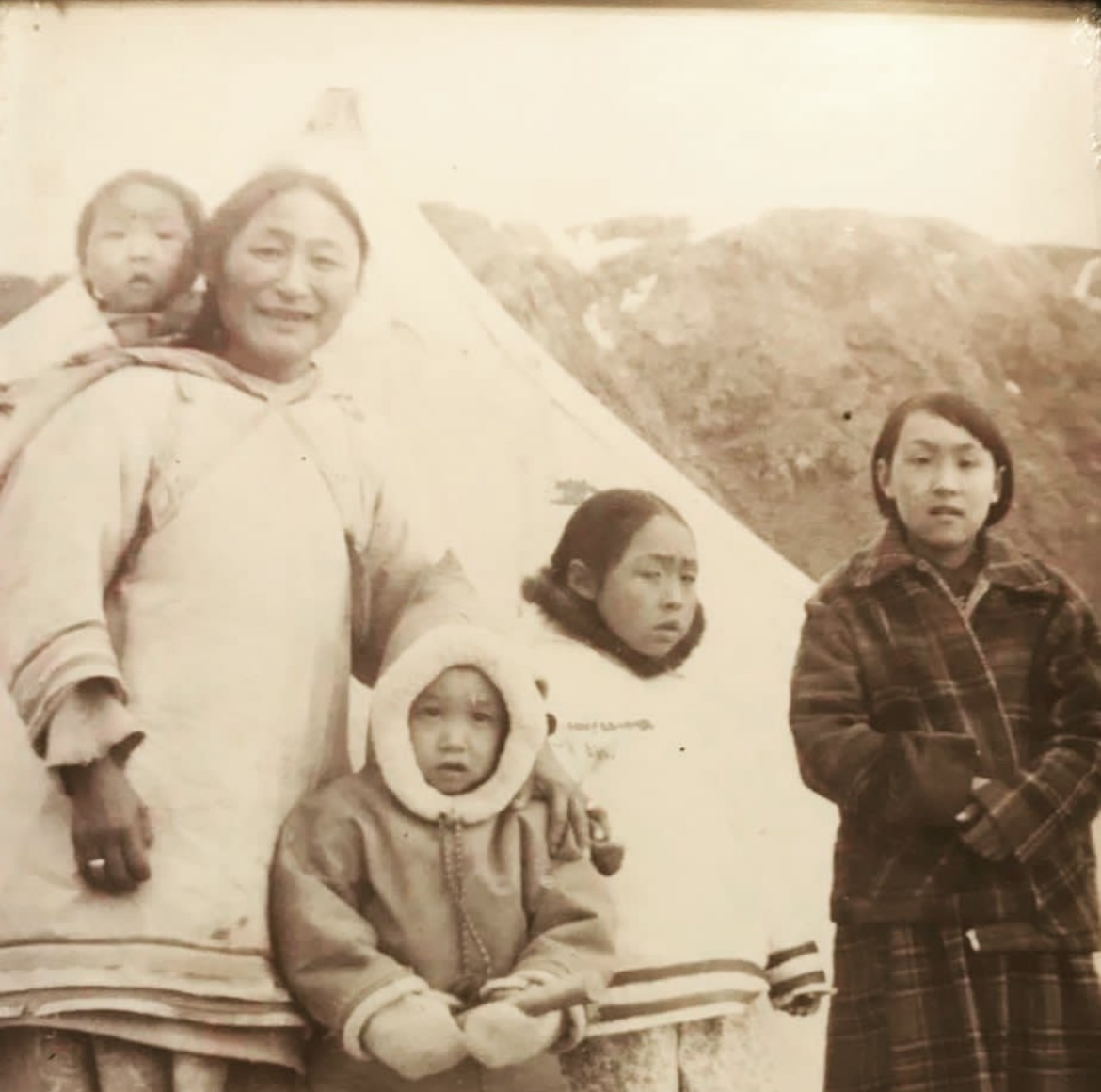
Tookasie Akpaleeapik, right, and other unidentified members of the Akpaleeapik family pose for this undated photograph. (Photo courtesy of Lilli Akpaleeapik)
Not everyone has the privilege of growing up with their grandparents presence and knowledge. It’s a blessing I didn’t have.
My anaanatsiaq was Tookasie Akpaleeapik. When my family, who is from Pond Inlet, was chosen to help the Inujjuarmiut (families from Inukjuak) adjust during the High Arctic Relocation in the 1950s, she followed to Grise Fiord.
Author Larry Audlaluk mentions my grandmother in his memoir What I Remember, What I Know: The Life of a High Arctic Exile.
“When we arrived in Grise, after the aircraft’s engines stopped and the pilot opened the door to let us out, none of us wanted to be the first to get out. We were too shy. Tookashie was the brave one, getting out first.”
After the relocation she was sent to Churchill, Man., where she attended residential school. After graduation, Tookasie Akpaleeapik moved to Ottawa to practise nursing.
She took her own life shortly after, and that loss still affects my family. Grief doesn’t just magically go away over time; it stays with us throughout generations.
Everyone remembers her as a strong young woman who wasn’t scared to follow her dreams, regardless of hardships.
Her soul is still shining bright through my oldest sister, Maggie Tookasie, who was given my anaanatsiaq’s name by my anaana (mother) Katie Koonoo.
I believe Tookasie Akpaleeapik would be so proud of all of us and our accomplishments, especially her panik (daughter), Katie Koonoo, who is an amazing nurse. I know she’s watching over us and smiling.
Although I didn’t grow up knowing her, I find ways to keep her memory alive and honour her name.
On Sept. 17, I participated in Isaksimagit Inuusirmi Katujjiqatigiit Embrace Life Council’s polar dip at Apex beach in Iqaluit to honour her and to raise awareness for suicide prevention.
Nunavut Tunnavik Inc. and the Nunavut government declared last June that suicide is still a crisis in Nunavut, marking 10 years since they made their initial declaration in 2015.
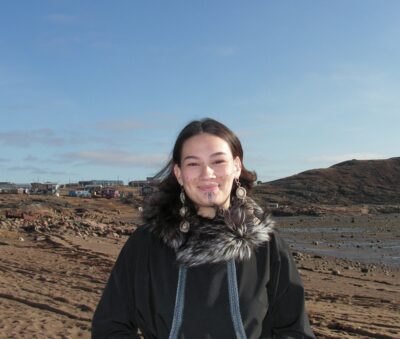
Lilli Akpaleeapik smiles after she participates in Isaksimagit Inuusirmi Katujjiqatigiit Embrace Life Council’s polar dip at Apex beach on Sept. 17. (Photo courtesy of Lilli Akpaleeapik)
Hosting events raises awareness and fosters community, both of which are crucial, even if an activity like a polar dip isn’t well known within Inuit culture.
Running into the icy water gives people a reset if they need it, and it provides a space for people who are affected by the same issue to gather.
Before it was my time to go into the ice cold bay, I sat on the beach watching the water, thinking of my loved ones and their suicide attempts, reminiscing about my own attempts to take my life when I was younger.
After hearing Tookasie’s name announced, I got ready to head into the water. The crowd cheered me on as I ran in solo.
It was amazing to hear so many Inuit say her name again, to hear her story, to remember her accomplishments, her smile, and who she was — not only for the tragedies faced or losses experienced.
I was born and raised down south. This year marked my first time ever stepping foot on the nuna (Inuit land), and it was so powerful being back home. I wanted to reconnect with my family.
The dip was one way of doing that. It marked my first time being in the Arctic Ocean, in the waters that my family has used for generations.
Feeling that ice cold water surrounding my body from head-to-toe was refreshing. It silenced my thoughts for a moment. It reminded me that I’m alive and that I’m capable of doing hard things. The experience also provided me with a sense a relief for when life feels overwhelming.
Suicide has followed me and my family since childhood. It’s hard to heal from things you can’t escape. But I will never forget those who we have lost. I will continue to honour them daily.
(0) Comments