


Judge, lawyers at odds over attempted-murder sentence
Lawyers make joint submission for 7-year sentence; judge says 12 would denounce violence against Indigenous women
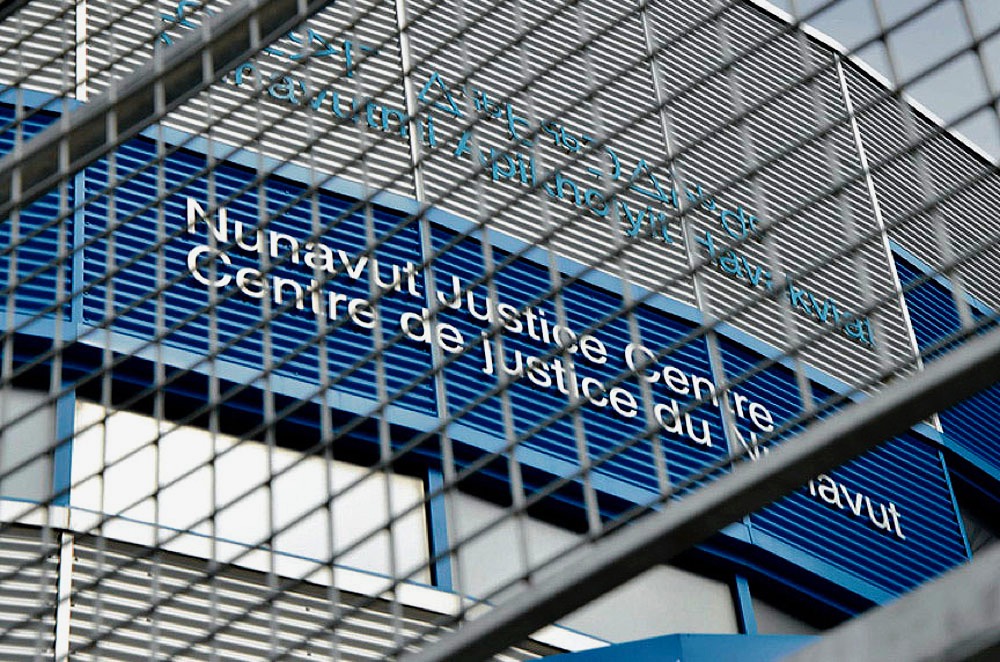
Feb. 20 has been set as the sentencing date for Mosesee Nakashook on charges of attempted murder and forcible confinement. (File photo)

An Iqaluit man will wait until next month to learn his sentence for attempted murder and forcible confinement after the judge and Crown and defence lawyers deliberated Monday over how much time he should spend in jail.
At an earlier court appearance, Mosesee Nakashook pleaded guilty to the 2020 attempted murder of a woman and forcible confinement of two of her friends.
The young victim was left with permanent injuries, court heard.
On Feb. 9, 2020, the RCMP asked for the public’s help in locating Nakashook, before he was found and arrested the next day.
In court in Iqaluit Monday, Chief Justice Neil Sharkey said he’s looking to sentence Nakashook to 12 years in prison, citing a need to denounce violence against Indigenous women.
Crown lawyer Stephanie Boydell and defence lawyer Alison Crowe provided a joint submission proposing a seven-year sentence, citing case law, factors related to Nakashook’s upbringing and what they described as his positive rehabilitation while in custody.
Boydell read several examples of attempted murder cases in Canada in which the offenders were handed sentences similar to the lawyers’ joint submission.
She also read out some of the details from Nakashook’s Gladue report — a pre-sentencing report which describes an Indigenous offender’s life experience — that included details of childhood trauma, abuse and periods of homelessness.
“He has done a significant amount of programming,” Boydell said, highlighting the rehabilitation efforts Nakashook put in during the nearly four years he has been in custody.
Sharkey acknowledged all those factors, saying Nakashook has received “outstanding references” from counsellors and is unlikely to reoffend.
However, Sharkey noted that denunciation of violence against Indigenous women is the “larger issue.”
The Criminal Code says courts should consider denunciation and deterrence in cases where the victim is a vulnerable Indigenous woman.
“Parliament is telling me I should impose a harsher sentence — should I not?” the judge said.

Sharkey said he is not comfortable with a sentence that is close to half of the 12 years he’s considering.
Crowe spoke briefly, saying Boydell covered the details of the joint submission, especially those relating to Nakashook’s life story.
“It’s a small miracle he survived his childhood,” Crowe said.
She also calculated the number of days Nakashook has spent in custody, for which he would receive one and a half days’ credit for every day in jail since his arrest.
Based on that calculation, the nearly four years he has spent in jail would equal about six years’ credit for time served, she said.

After a brief break, Sharkey told the court he wants to consider the information in the joint submission before making a final decision.
He also told Nakashook, who sat attentively through Monday afternoon’s proceedings, that his case would soon be finished.
Feb. 20 has been set as the sentencing date.
The NCJ really always second guessing on joint submissions indicates a lot of disrespect for the local bar.
The NCJ is a fact-finding body. One of the institution’s primary responsibilities is to ask questions and second guess. This is a pillar of common law practice.
I’m going to start referring to “the local bar” as the Zoo. Plenty of transients coming through, a strong divide between locals and fly-ins, and that one weird lady in the corner with too many cats.
Unless things have changed, which I highly doubt, most lawyers authorized to practice in Nunavut RARELY set foot in the Territory at all.
Victims should be weighed more on how this affects them, being held against your will and god knows what type of things were happening to them will have a life long affect. I feel the Nunavut justice systems sympathizes the perpetrator a lot more then it should – which is terrible.
there are women who grow up terrible and abused in sick ways but you don’t hear them keeping hostages and causing pain.
Sending strength to the survivor ❤️
Good post. I agree with your comments. It seems that victims are forgotten about in these types of cases.
I agree also but this is on both side, both men and women, there are also a lot of men that go through this but it’s swept under the rug and not taken seriously majority of the time.
Both sides need to be looked at here. Equally.
Agreed.
This offender is lucky to have 2 defence lawyers advocating for him. I remember a time when the crown would usually fight for justice for the victim and defence would try and defend their “client”
Stop using what was done to the offender in the past as an excuse “offender’s life experience — that included details of childhood trauma, abuse and periods of homelessness.” If there were things done to him in the past that were that bad… charge those that did the wrong to HIM. because if you dont these women will be told its ok to do bad to other people because he did this to you…. and the cycle could continue, unless these women stop the cycle all by themselves with NO HELP FROM THE AUTHORITIES.
There were a lot of bad things that happened (residential schools for one) and really we dont have the power to go after those that did the bad back then (though i do think NTI/everyone should keep trying). but we can look to protect the kids and women and men right now from having more bad done to them.
Write your MP, you do know that what they are referring to, is straight out of the Criminal Code of Canada, a statute of law, the judge must use in sentencing. This can only be changed by Parliament. Dont believe me? Read it, Section 718.2e “718.2 A court that imposes a sentence shall also take into consideration the following principles: (e) all available sanctions, other than imprisonment, that are reasonable in the circumstances and consistent with the harm done to victims or to the community should be considered for all offenders, with particular attention to the circumstances of Aboriginal offenders.”
Dont like it, like I said, write your MP and have a bill to change the Criminal Code of Canada