

Kuujjuaq festival organizer hopes to spark conversation about Inuit identity
The event, which commemorates the 50th anniversary of the JBNQA, takes place until Wednesday
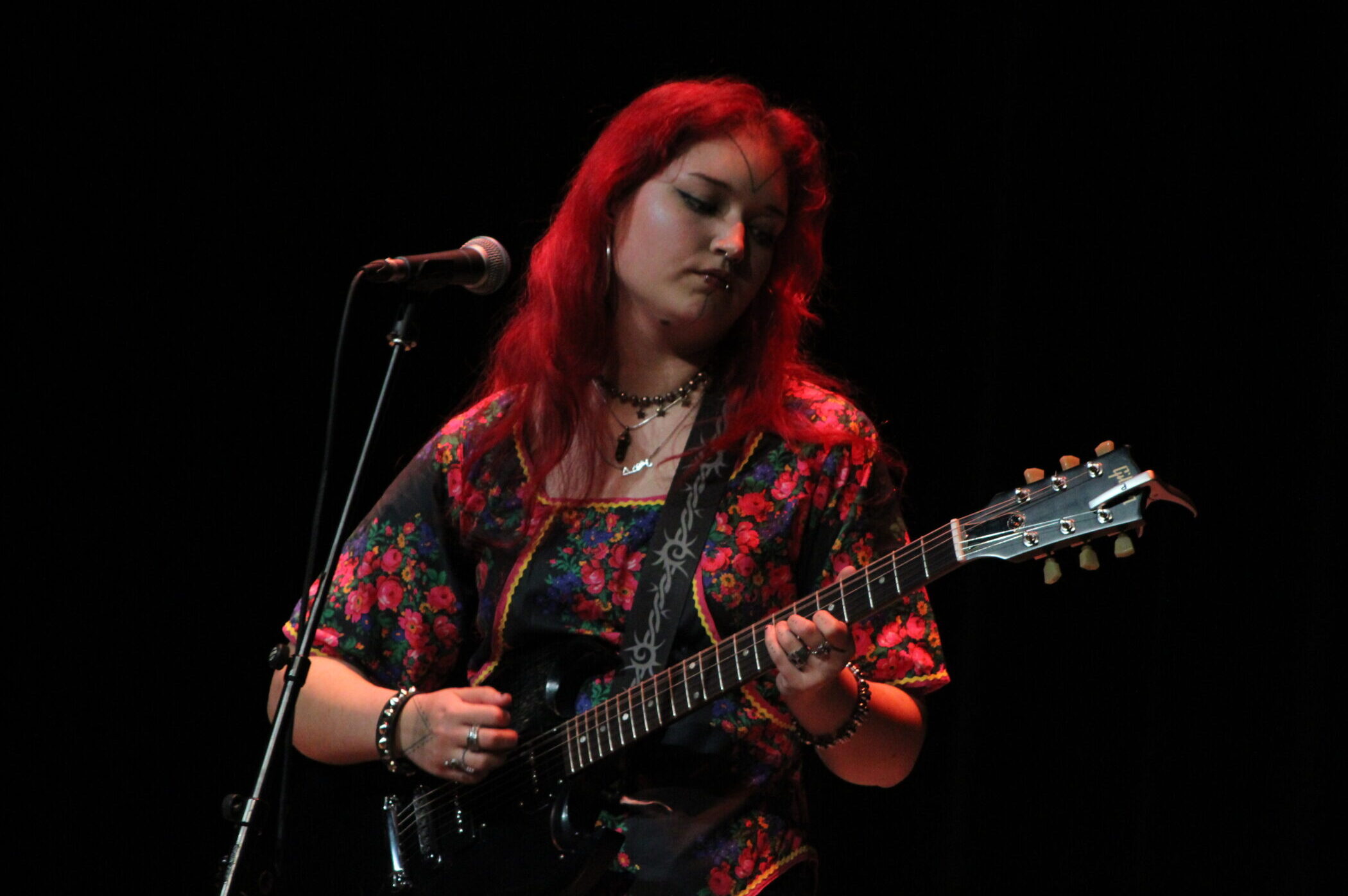
Niivi Snowball performs during the Path to 100 festival in Kuujjuaq on Monday. (Photo by Dominique Gené)
For organizer Saali Kuata, the Path to 100 Festival offers an opportunity to move beyond commemorating the James Bay and Northern Quebec Agreement. It allows for Inuit to examine how it has shaped their communities.
Art can start that conversation.
“Art is just another language that we can use that can transcend language,” said Kuata, Avataq Cultural Institute program director, in an interview.
The Path to 100 festival celebrates the 50th anniversary of the JBNQA and takes place at the Katittavik Theatre in Kuujjuaq from Sunday to Wednesday. It features an art exhibition, performances and workshops, as well as discussions about cultural identity, futurism and economic development.
The governments of Quebec and Canada, as well as representatives for Nunavik Inuit and Crees of Eeyou Istchee, signed the the JBNQA on Nov. 11, 1975. It led to the creation of a school board, a regional government and health-care system in Nunavik.
The festival’s name, Path to 100, reflects a long-term vision for Inuit.
That means Inuit having greater control over the decisions that affect their communities while protecting their cultural identity and rights.

“If we want a sustainable future, we have to put our feet down and determine for ourselves, as we have done before, that nothing goes without us,” he said.
Kuata said he worries that as more Inuit adopt English and participate in the western education system and economy, they risk losing touch with what makes their culture unique.
“We find ourselves attaching our identity and our language to the common culture,” he said.
Besides throat singing, drawing, carving and printmaking workshops, the festival also had performances.
Singer Niivi Snowball, child of musician Etua Snowball, performed on Monday night, including the song, No Pride in Genocide, influenced by Etua’s songwriting. Etua was in the audience.
“My writing style is so heavily influenced by him,” Snowball told the audience. “The way he writes music, this heavy-hitting, unapologetically political way of writing his songs influenced me without me even realizing.”

Before performing the song, which addresses suicide and the impacts of colonization, Niivi Snowball urged Inuit to reject the idea that death is their only way out.
“I want you to know that this is not our fault,” Snowball said. “The government, colonization wants us to think that the only way out is to die. But we are strong, and we can fight against it.”
(0) Comments