

Nunavik leaders to unify efforts in fight against substance abuse in region
Declaration calls for better health services and infrastructure, and Inuit oversight on youth protection
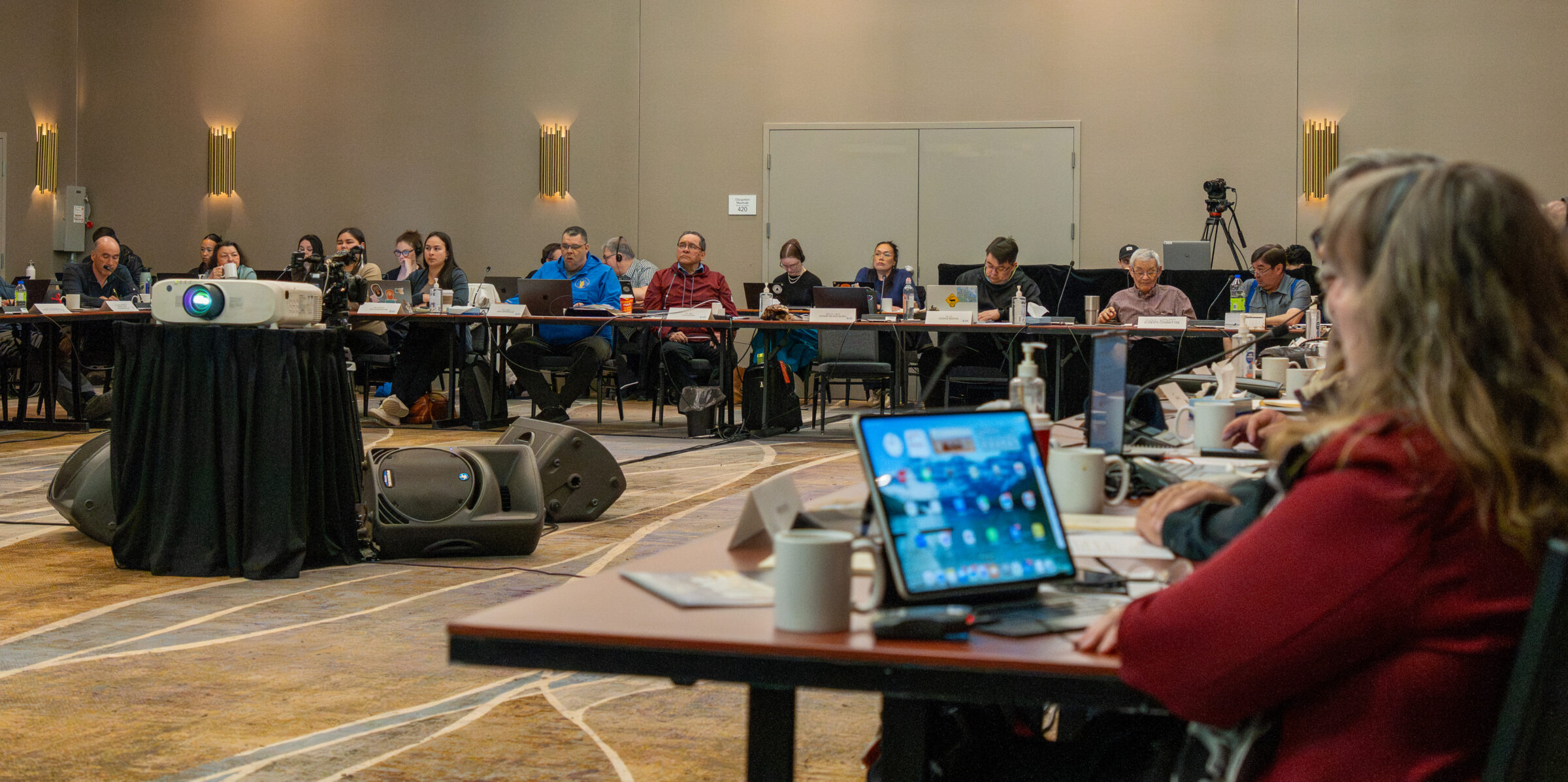
Leaders from every Nunavik organization are agreeing to co-ordinate efforts on major issues facing the region. They signed a declaration April 16, at the end of last week’s all-organizations meeting in Montreal. (Photo by Cedric Gallant, special to Nunatsiaq News)
Leaders across Nunavik have signed a joint declaration calling for collective action against substance abuse in the region.
The declaration was signed April 16, on the final day of Nunavik’s all-organizations meeting which ran last week in Montreal.
Nunavik is “facing a major crisis related to substance use and the alarming rise in violent crime, a situation that threatens the safety, health, and future of Inuit and their communities,” the declaration says.
The goal is to present a united front among all Nunavik organizations when lobbying for funding and support from both the provincial and federal governments, said Makivvik president Pita Aatami.
There are three commitments in the declaration: co-ordinate in an effort to effectively address Nunavik’s challenges; establish a committee with a representative from every organization; and tackle substance use in the region with firm measures against drug trafficking and alcohol bootlegging.
One of those measures could be banishment of bootleggers and drug traffickers from communities. Leaders discussed the legality of going this route during last week’s meetings.
The declaration touches on several themes discussed during the meetings, including self-determination, health, youth protection, education, housing, municipal services, infrastructure needs, language, and culture.
It states that Nunavik’s organizations support repatriation of child and family services under Inuit governance and calls for the building of “super hospitals” in Kuujjuaq and Puvirnituq as a priority in order to “stop the erosion of health services available in Nunavik.”
No details were provided on what those hospitals would look like.
Aatami said Kativik Regional Government is surveying how much it would cost to provide a direct water connection to essential services in communities, like schools and health centres. Puvirnituq went through a state of emergency in spring 2025 after a broken pipe led to a water shortage and temporary closure of the community’s hospital and schools.
Leaders plan to bring that cost estimate to the new Quebec government cabinet, led by Premier Christine Fréchette.
“We will know more about how much response the government will give in terms of how much they will give toward our requests,” said KRG chairperson Maggie Emudluk.
The declaration was signed in draft form, meaning additional priorities and actions will be added to it in the future.
Just remove murder from the criminal justice system and things might even be restored. Even the essential drinking water public works. Or just follow Pita Adams into the unnone territory that he is a master in. Cheers 🍻🤑
These old style should disappear already. Being aboriginal and native to our land, with many good inuit I don’t think it comes from inuit.