


Police, health officials warn ‘pink cocaine’ circulating can be lethal
Pink cocaine is not real cocaine; contains fentanyl, ketamine and other unknown chemicals
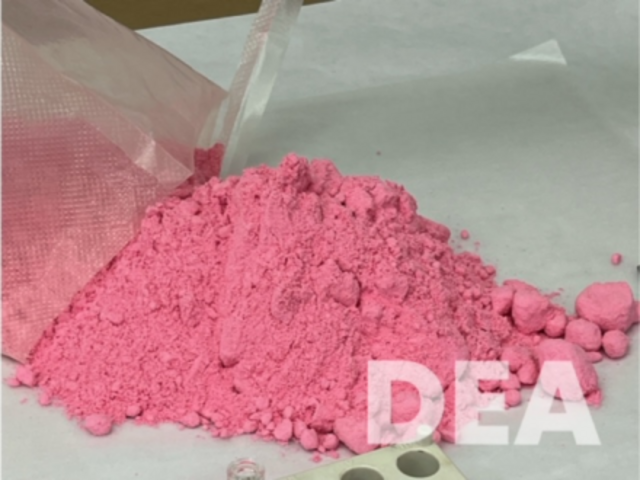
A sample of pink cocaine, a synthetic “party drug” containing fentanyl, ketamine and other unknown chemicals, from the U.S. Drug Enforcement Administration. Not real cocaine, the substance has prompted a public health advisory in Nunavut after reports of it circulating in communities such as Cambridge Bay. (Photo courtesy of WikiCommons/U.S. Drug Enforcement Administration)

Nunavut health officials and police are warning about “pink cocaine,” a synthetic drug they say is circulating in Cambridge Bay and other communities and may contain fentanyl and other dangerous substances.
Nunavut RCMP have launched an investigation and seized suspected drugs in Cambridge Bay, they said in an email to Nunatsiaq News Friday.
Test results revealed what’s suspected to be fentanyl. The substance has been sent for further analysis, said Nunavut RCMP spokesperson Sgt. George Henrie.
The Department of Health issued an advisory Thursday saying the bright pink substance, which appears in powder and pill form, may contain fentanyl, ketamine, methamphetamine or other unknown chemicals.
It can cause overdose or death even in small amounts, the advisory said.
Fentanyl is an opioid painkiller that can slow breathing to dangerous levels. Ketamine is a medical anesthetic that can cause sedation and hallucinations, while methamphetamine is a powerful stimulant that speeds up the brain and nervous system.
Dr. Ekua Agyemang, Nunavut’s chief public health officer, said the name pink cocaine is misleading because it does not contain cocaine.

“Pink cocaine is a street name for a synthetic drug cocktail,” she said. “It’s a deceptive mix of multiple substances, and it often includes opioids which can be lethal.
“The exact chemical composition of every batch varies, and it’s unpredictable. And it’s difficult to detect with standard drug testing.”
“People don’t really know what they’re taking. That is where the danger is,” Agyemang said.
The health alert was prompted by community reports on Facebook, she said.
“We decided to take advantage of the situation to educate the general population in Nunavut,” she said.
She said no overdoses in Nunavut have been medically attributed to the drug, but officials have “strong evidence that it’s circulating in communities.”

Agyemang identified Yellowknife as a “hot spot” for drugs entering the territory, noting a lack of security screening at the airport.
She said the drug’s appearance, often bright pink with a sweet smell, increases the risks especially for youths as it looks like “candy.”
“It is dyed pink by either using pink baking soda or pink food colouring, and this is what gives it its allure,” said Michelle Arnot, a pharmacology and toxicology professor at the University of Toronto.
She said pink cocaine, also known as “Tusi” or 2C compounds, is not new as a party drug but remains highly unpredictable.
Across Canada, reports of pink cocaine are few, she said. One sample recently tested in Toronto contained fentanyl and xylazine, a potent animal tranquilizer.

Pink cocaine can contain a mix of stimulants, depressants and hallucinogens, making the effects severe for inexperienced users.
Arnot warned that mixing the drug with alcohol could sharply increase health risks, noting cases where pink cocaine containing ketamine has caused acute renal failure requiring dialysis.
Administering naloxone is effective for treating opioid overdoses, but experts say it won’t address all the chemicals in pink cocaine.
“If there are no opioids in the system, it won’t help but it won’t harm,” Arnot said.
The Health Department advisory encourages Nunavummiut to report suspicious substances to the RCMP or to local health centres, to carry naloxone kits, and to recognize overdose signs including trouble breathing, blue lips or fingertips, and unresponsiveness.
As for what people can do in a crisis, the advice varies by symptoms, Arnot said.
“It depends — are they respiratory depressed? Then CPR, rescue breathing, compressions. Are they hallucinating and afraid? Then keep them calm, safe, quiet, and reduce stimulation,” she said.
“The responses can be totally different.”
Dealers who kill their customers by o.d., should be charged for 1st degree murder, as they know their products can kill.
Nunavut may not have roads from one community to the next, but Canada Post main outlets in cities/territories would or could benefit with CBSA services from drugs entering in.
Its in Kugluktuk too..,
Pink cocaine cocaine contains ketamine and mdma check out the results from getyourdrugstested, instead if this dear mongering nonsense piece