


‘Waiting for Godot’ in Inuktitut highlights Inuit strength through suffering
Artist Tatanniq Idlout discusses 5-year process to translate ‘most significant English-language play of the 20th century’
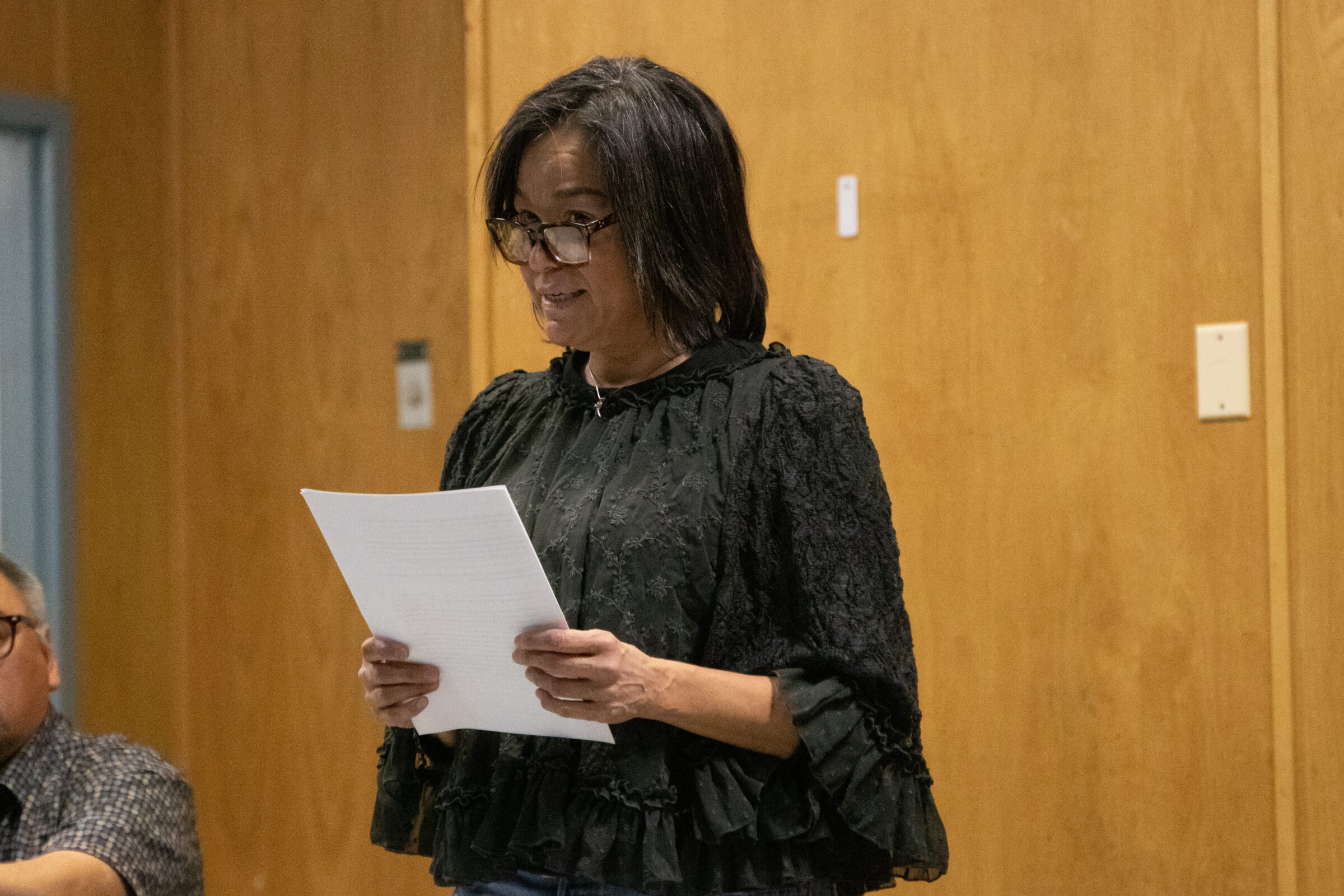
Tatanniq Idlout, seen here campaigning for the 2025 Nunavut election, plans to be in Iqaluit the week of July 6 to hold auditions for an Inuktitut production of Samuel Beckett’s “Waiting for Godot.” (File photo by Jeff Pelletier)
The first line in Samuel Beckett’s Waiting for Godot is “Nothing to be done,” or “Ajurnamat” in Inuktitut.
But Tatanniq Idlout says if she has learned anything from the five-year process of translating the two-act play into Inuktitut, it’s “I can do anything,” or “ajurnarmangituq.”
Idlout, an actress and singer-songwriter, collaborated with filmmaker Carol Kunnuk, interpreter Ruth Angutiqjuaq, editor Kaitaasi Peter, translator Mary Petooloosie and director Ross Manson to translate the text.
“I don’t speak Inuktitut,” Idlout said in an interview. “But I understand Inuktitut so in depth. When we were translating the play, I was able to say, ‘No, you’ve got that wrong, this is what the script says.’”
Auditions to play the main character Estragon are scheduled to start July 6 in Iqaluit. The actors cast as the play’s other three characters hail from Igloolik, Ottawa and Manitoulin Island.
The team previously had an actor lined up to play Estragon as well, but Manson said he was “lost to Movieland.”
Idlout says she wants actors, amateur or professional, to try out and to find the story in their own history, or in their family history. After all, Waiting for Godot is not about Godot, who never makes an appearance.

“It’s not about who they wait for, it’s how they wait for that person,” Idlout said. “And that’s what we have as a strength as Inuit.”
Idlout first read Waiting for Godot — voted “the most significant English-language play of the 20th century” by London’s Royal National Theatre — when she was 18 and living in the south as a Sixties Scoop survivor. For years, she thought of translating the play, which is about two men who wait for a God-like figure who they believe will, once he arrives, save them from their suffering.
“The Irish went through a very similar experience that we did as Inuit,” Idlout said of the play, which was written by an Irish novelist and playwright. “In terms of colonization, residential schools, loss of language, the church abuse. So, I related to the story from the outset.”
What also resonated with Idlout’s Inuk identity is how the characters work through their problems.
“You see it as a black comedy,” she said. “What is most beautiful about the story is that they use humour to overcome all the hardships that they experienced.”
Idlout’s art collective 662 OCA is co-producing the show alongside Volcano Theatre Company. It’s scheduled to debut in May 2027 at the National Arts Centre in Ottawa before travelling to Inuit communities.

This is really cool and impressive, bravo!
I hope you are very successful in what you are doing and god bless you, but please do not
compare Nunavut to the slaughter and starvation, and terrible potato famine which was
endured by the brave Celts of Ireland over the centuries.
ERIN GOH BRAGH !!
They, as a brother indigenous people, fought 800 years of colonization – maybe there is something to be learned?
I think it’s very cool how they’re transcending this play across cultures.