


Young doctors in love … with Nunavut
Bringing young doctors north for the short term could be a way to keep them for the long term
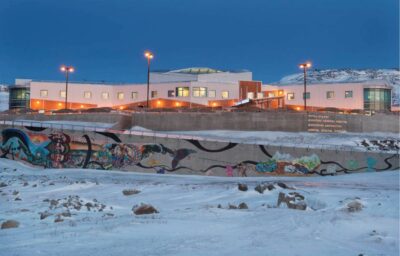
A new partnership between the Government of Nunavut and the University of Ottawa is expected to see eight new doctors complete their residencies in Nunavut, including at the Qikiqtani General Hospital, seen in this undated file photo. (File photo)

Young Doctors in Love was the name of a largely forgettable early-1980s movie about eight young interns working under the direction of a bold surgeon in Chicago.
The title sounds a bit like a strategy the Government of Nunavut and University of Ottawa are using to make doctors fall in love … with Nunavut.
They announced earlier this month a partnership that will see recent graduates of the university’s faculty of medicine complete their residencies in Nunavut. Four are going to come north in 2027, followed by four more in 2028.
It’s an innovative way to bring much-needed medical care to the territory. Every city and every town in Canada is grappling with a doctor shortage. Across the country, there’s a lot of competition among communities, all desperate to recruit and retain doctors.
So, good for Nunavut for looking for new ways to attract them. If it’s successful, bringing more young, early-career professionals in other fields to Nunavut for the short term might be a model for recruiting them in other much-needed fields.
Hopefully, it will lead to the new doctors becoming long-term members of the community.
“We hope what happens there is that some of those family physicians end up falling in love with Nunavut and join the incredible teams of physicians, nurses and health-care practitioners who are there to provide care,” Dr. Elizabeth Muggah, the chairperson of the university’s family medicine department, told a Nunatsiaq News reporter recently.
The strategy makes sense. There’s no doubt some of the new doctors will fall in love with the territory. It’s cold, dark and remote. But the land and people are beautiful. It’s a great place for young professionals looking for an adventure to start their careers.
One of the predictable benefits will be the satisfaction that comes from meeting a need to provide medical treatment to Nunavummiut.
Dr. Francois de Wet, the chief of staff for Nunavut’s Health Department, said there’s a tendency for people to stay where they train.
It’s not exactly the same thing, but this editorial writer moved to Niagara Falls, Ont., fresh out of journalism school, planning to stay for two years but hung around for 16.
It’s not just in medicine. It often happens that young professionals put down roots in the communities where they do an internship or where they get their first jobs early in their careers.
Nunatsiaq News can speak from experience. This paper has enjoyed its own success in hiring young, early-career journalists who move to Iqaluit and fall in love with the territory.
They’re eager to learn — about their new profession, their new surroundings and their new neighbours. They work hard, and they reap the professional and personal rewards that come with taking the road less travelled.
Of course, professional positions in Nunavut should, ideally, be filled by Inuit. But, of course, everyone knows that’s not possible because there are not enough Inuit ready to fill professional positions. Yet.
As more and more Inuit get post-secondary educations, Inuit will increasingly fill the ranks of all professions.
While that’s happening, innovative arrangements like the one the GN and the University of Ottawa have forged will help meet the demand for medical — and other professional services.
(0) Comments