

Inuk Sobey finalist reimagines northern grocery culture
Tarralik Duffy turns everyday items into hand-sewn sculptures
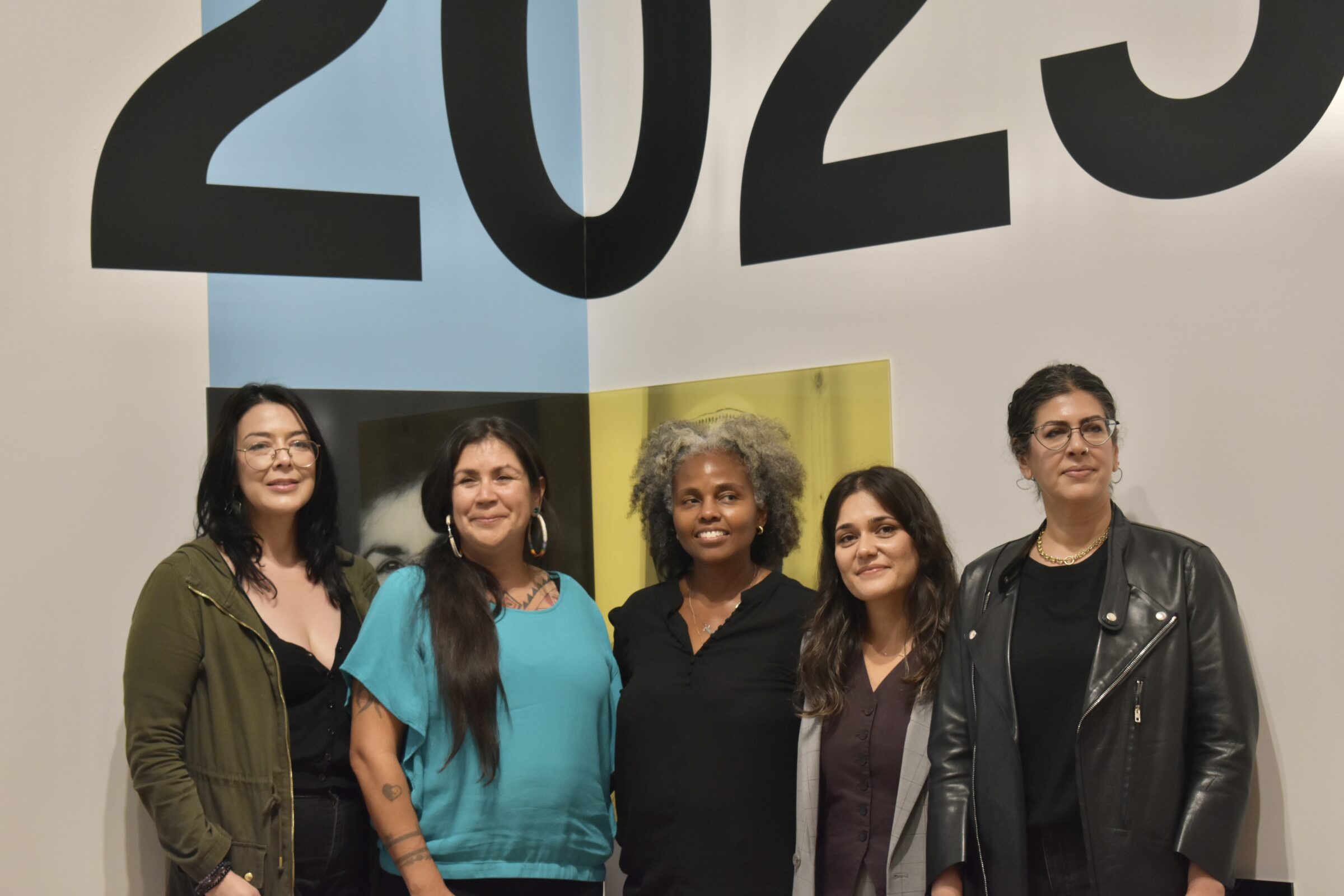
Sobey Art Award finalists Tarralik Duffy, left, Tania Willard, Sandra Brewster, Hangama Amiri and Swapnaa Tamhane, pose for a photo Thursday at a media preview for the 2025 exhibition at the National Gallery of Canada in Ottawa. (Photo by Nehaa Bimal)


Tarralik Duffy’s Kuuka Kula, an eight-foot Coca-Cola can stitched by hand from leather and stuffed with polyester, is part of the 2025 Sobey Art Award exhibition at the National Gallery of Canada. (Photo by Nehaa Bimal)
Standing beside an eight-foot Coca-Cola can that she stitched by hand, Tarralik Duffy says her art is about more than pop culture nostalgia.
“It’s literally a piece of pop art,” Duffy said Thursday at a media preview for the Sobey Art Award exhibition at the National Gallery of Canada in Ottawa.
But, she says, “Pop can prices in Nunavut are astronomical and there’s an illusion of plenty. But if you don’t have money, you don’t have access to it.”
The Sobey Art Award, now in its 24th year, is Canada’s most prestigious contemporary art prize.
Duffy, who is from Coral Harbour and based in Saskatoon, Sask., is one of six finalists for the $100,000 grand prize.
Her soft sculptures are stitched from leather and stuffed with polyester. She has created life-sized jerry cans, an oversized Bic lighter and smoke, and Klik, the canned luncheon meat.
The use of grocery items is a reflection on consumer culture in northern life, and how it is connected to deeper histories of colonialism, Duffy said.
“We were colonized by a department store,” she said, referring to the Hudson’s Bay Co.
“I also a joke about how we were colonized by condiments,” she said, pointing to the role of brands like China Lily soya sauce in Inuit households as a dipping sauce for traditional foods like maktaaq or caribou.
“It’s tied to very warm memories of sharing food, but is also a culture clash.”
Duffy said her work uses familiar branding, relabelled in Inuktitut, as well as colourful packaging to explore marketing tactics for processed foods.
“You have something that’s so garish — like blended pork smashed up in a can — that’s more acceptable than our traditional hunting diet,” she said.

“What if our food was also wrapped up in pretty packaging?”
Duffy follows in the footsteps of several Inuit artists who have been recognized by the Sobey Art Award.
Annie Pootoogook won the award in 2006. Iqaluit-based artist Laakkuluk Williamson won in 2021, while Kablusiak, an Inuvialuk artist, won in 2023.
Williamson, who is now on the Sobey prize jury, penned Duffy’s introduction in this year’s Sobey Award exhibition guide.
Duffy also works in jewelry, digital drawing and writing, but said sewing remains central to her practice.


Tarralik Duffy’s Klik, a hand-sewn soft sculpture of canned luncheon meat, comments on how traditional Inuit foods are contrasted by processed products at the Northern grocery stores. (Photo by Nehaa Bimal)
“Stitch by stitch, it slows the time down,” she said.
“That’s why I started working with my hands in the first place, because it quiets the mind and every stitch connects me to my grandmother — or Anaanstiaq — and my aunties, and home.”
The winner of the Sobey Art Award will be announced Nov. 8.
The exhibition of finalists runs until Feb. 8, 2026, at the National Gallery of Canada.
(0) Comments