


A look at federal election issues for Nunavik
What the federal parties have to say about Inuit self-determination, the environment and more
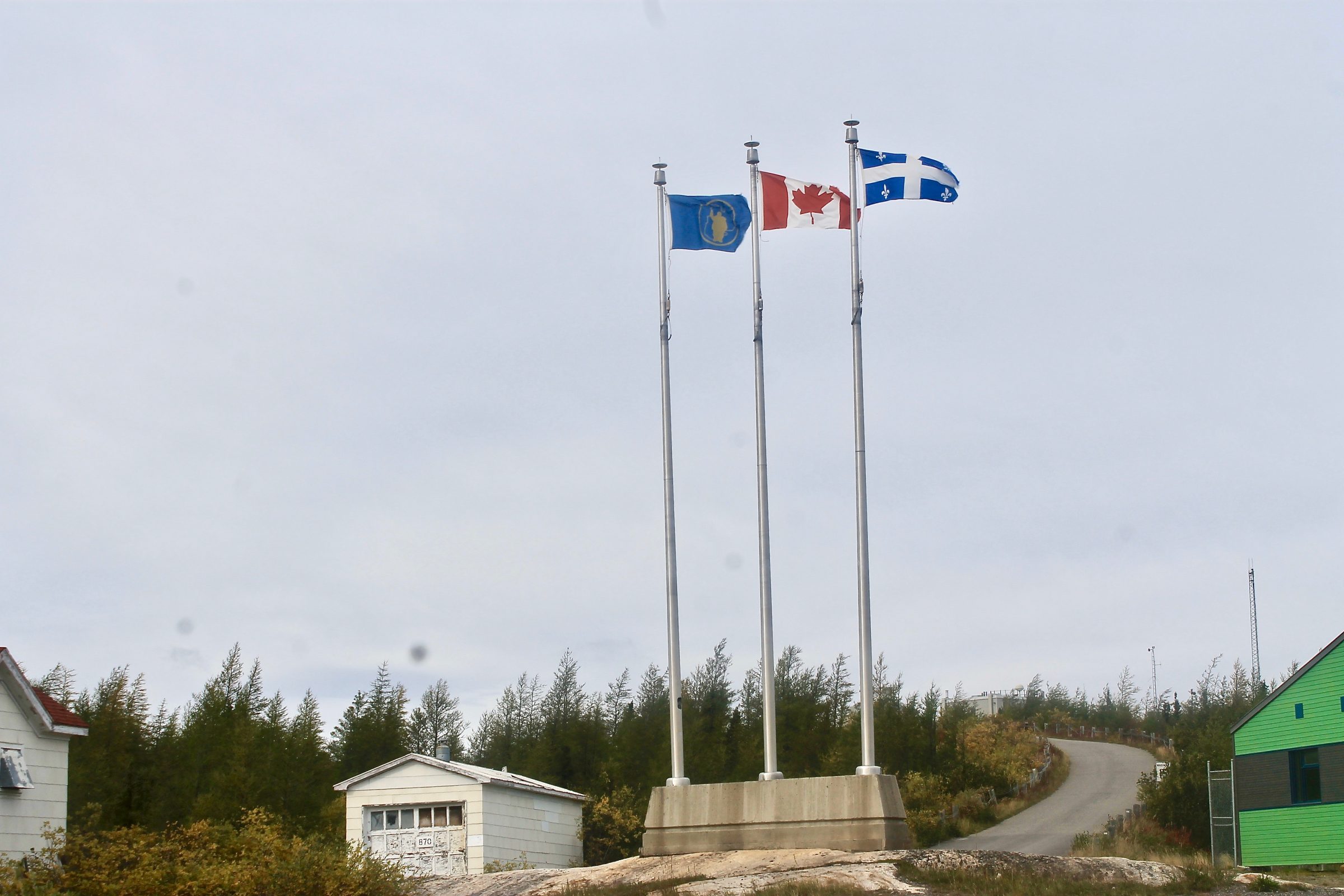
Canada goes to the polls on Monday, Oct. 21. Quebec’s Abitibi-James Bay-Nunavik-Eeyou riding is the largest in the province by landmass, and is inhabited by about 90,000 people. (Photo by Elaine Anselmi)
With the federal election just a week away, Nunatsiaq News looked at some of the big issues affecting Nunavik.
We asked the candidates from the top five parties in the Abitibi-James Bay-Nunavik-Eeyou riding for their take and what they’ll do for Nunavimmiut.
In total, the massive riding encompasses 855,000 square kilometres—more than half of Quebec—and is the largest riding in the province. Nunavimmiut make up about 13,000 of the riding’s approximately 90,000 people—about 14 per cent.
After a week, none of the candidates responded to either a request for interview or a list of questions.
Here’s what their party platforms and leaders’ promises had to offer:
The United Nations Declaration on the Rights of Indigenous Peoples
The NDP has committed to implement the United Nations Declaration on the Rights of Indigenous Peoples. This was a priority of current NDP MP Romeo Saganash, who twice introduced private members bills to make UNDRIP law.
The first bill was voted down in the House of Commons under the Stephen Harper Conservative government.
Saganash’s second bill was introduced in 2015 under Justin Trudeau’s Liberal government. It passed in the House only to be held up by Conservative senators last year.
The Conservative party still has not committed to putting UNDRIP into law and party leader Andrew Scheer has several times mentioned his concern about the declaration’s requirement for “free, prior and informed consent” blocking future development projects.
The Conservatives have said they would create a ministerial portfolio tasked with consulting with Indigenous groups that hold rights affecting major development projects.
The Green Party, Bloc Quebecois and Liberals have all pledged to make UNDRIP law.
Self-determination
In June, the Makivik Corporation signed a memorandum of understanding with the Liberal government toward the self-determination of Nunavimmiut. This provides a framework for negotiating the role and establishment of an Inuit government in Nunavik based on Inuit values, heritage, identity, culture and language.
The memorandum was co-signed by Makivik President Charlie Watt and Crown-Indigenous Relations and Northern Affairs Minister Carolyn Bennett.
The NDP has said it would move forward with self-government agreements and the Bloc Québécois has also said it would respect the autonomy of Indigenous governments.
The Green Party has long promoted the idea of a Council of Canadian Governments, including representatives from federal, provincial and territorial, municipal and Indigenous governments.
Housing

The Green Party’s platform pledges the provision of safe and affordable housing, specifically pointing to the need in the North. They also promise resources to make homes more energy efficient across the country.
The Bloc Québécois has also, according to the Globe and Mail, committed to addressing the shortage of housing in Indigenous communities, referencing the tens of thousands of houses expected to be needed in Quebec over the next decade.
The Liberal Party has put forward a housing strategy that’s catered to communities and their unique needs, in collaboration with the Inuit Tapiriit Kanatami.
In their platform, the NDP specifically promises to address the crisis of mould in housing, to help ensure Indigenous people have safe, healthy and affordable homes.
Health care
The NDP has pledged to close the gap in health-care services received by Indigenous people and make more treatments locally available, with funding for health-care infrastructure and diagnostic equipment. They also promise to improve access to mental health and addictions treatment.
This spring, NDP MP Charlie Angus’ motion for a national suicide prevention strategy passed in the House of Commons.
Generally, the provision of health care is under provincial and territorial jurisdiction, and the NDP have said they would sit down with the provinces and territories to discuss new health-care agreements.
The NDP and Green Party have both pledged free pharmacare, and the Liberals have promised to move towards universal pharmacare but haven’t been clear when that might happen.
The Liberals have also promised to write a new health accord with the provinces and territories and come to a long-term funding agreement.
The Liberals have also promised access to family doctors for all Canadians—how this might work for people in communities with no family doctor has not been established, as recruitment has not proved to be simple. Currently just under five million Canadians are without a doctor, according to Statistics Canada.
The Conservative Party has said it would increase health transfer payments to provinces and territories by three per cent each year, which is the current cap on increases in transfer payments, put in place by the Liberal government—a decrease from the six per cent increase cap previously in place.
The Conservatives have also promised to put $15 million into a framework on palliative care, which was tabled by the Liberal government in 2018. And they would dedicate $1.5 billion towards MRI and CT machines across Canada, to decrease wait times and the need for travel for critical testing.
The environment and the carbon tax
The Liberal government has laid bare its plans to tackle climate change—plans critics, perhaps most prominently Green Party Leader Elizabeth May, argue aren’t bold enough.
The Liberals have pushed through protection for Arctic marine environments and put a five-year moratorium on Arctic offshore oil and gas development. The moratorium expires in 2021 and there has been no commitment yet as to whether it would be extended.
The Liberals have also introduced carbon pricing. Provinces and territories are either able to design their own carbon pricing systems, or have a federal carbon tax imposed as a backstop.
That means that Quebec, which has a cap and trade system, is exempt from the federal carbon tax.
How dare they not respond to giving information or at least an interview about their intentions for our riding! If they won’t respond to that why should we go vote? I thought they had aspirations for our communities! Stop insulting our intelligence you morons! At least write to the newspaper we read so that we can have an idea of what the *&^% you are trying to do or what you are not doing! You think we’re ignorant? Don’t show yourselves in our communities after being voted if you don’t respond to the least of the questions that need to be addressed!
HOUSING HOUSING AND HOUSING
I want to apologize for my remarks to the candidates but let me say it this way, My good ness! What!? We are not ignorant about the upcoming federal election next week which you candidates want to represent our riding in Abitibi/Eeyou/Nunavik. Remember that we are hard working Canadians too that need proper representation on all fronts especially at Ottawa. Please at least write a letter to Nunatsiaq news so that those of us who do not have internet access at our homes in the majority can read what your aspirations are to do something after the elections whether you are elected as opposition members, or governing MP’s. We keep going building our land up here and our children need a good place to grow up in. Thank you.
Where is our Makivik President?
We have no one leading this election, this is very serious matter, how are we going to address the election, who is who today?
We need voicing leader, who to trust, but on my part, I think there need to be a change not promises which never addressed properly. Unless, we’ll decide on our own, but I might know who to vote this time.
Good luck to all Prime Minister to be.