


As Baffinland goes, so goes Nunavut
While mining company goes through restructuring, its fate remains key to territorial economy
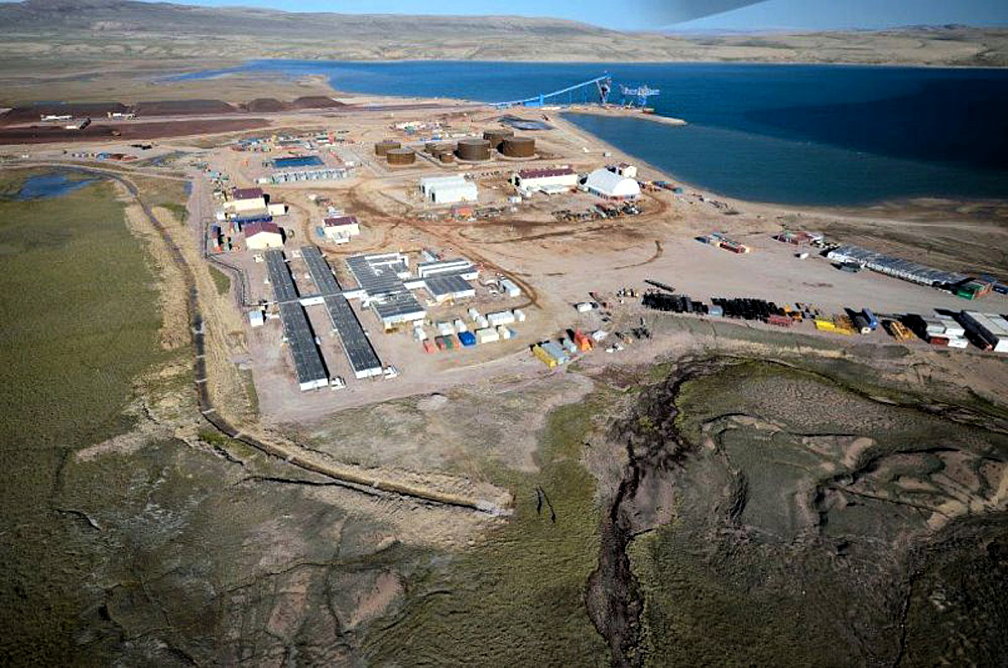
Baffinland Iron Mines Corp., which is more than $1 billion in debt, has had its creditor protection extended from May 25 to June 5, according to Ontario Superior Court of Justice records. (File photo)

Baffinland’s Mary River Mine is a bit like Nunavut’s General Motors — so integral to the territory’s economy that the company’s success goes hand in hand with its fortunes.
General Motors has been so closely linked with the U.S. economy since the 1950s that the phrase “What’s good for GM is good for the country” came to dominate political and business thinking.
There’s a similar relationship between Baffinland and Nunavut.
Iron mining at the Mary River Mine, near Pond Inlet, represents about 25 per cent of all the economic activity in Nunavut. Mining accounts for about half of the territory’s economy.
Baffinland has 1,200 employees, including 300 who are Inuit. Because it operates on Inuit Owned Land, it pays millions of dollars a year in royalties to the Qikiqtani Inuit Association, payroll and fuel taxes to the Government of Nunavut, and federal and territorial income taxes.
It has been two weeks since Baffinland asked an Ontario judge for protection from its creditors. The company is struggling with a $1.1-billion debt it incurred, partly as a result of its unsuccessful Phase 2 expansion proposal to build a railroad from the mine to Milne Inlet.
After a protracted review process, the federal government rejected that proposal over concerns about the effects of the expansion might have on caribou hunting and narwhal populations.
The court-ordered protection temporarily prevents the people and companies Baffinland owes money to from taking steps to get their money back. The move gives the mining company time to restructure its own finances in a bid to carry on. But one of the options is the potential sale of the company, a Baffinland news release said on May 15.
In the meantime, the company said it doesn’t expect any disruptions to its operations.
Its public statement says the company is considering alternatives while stabilizing its current operations. It also said it continues to work on its plan to build a railroad from the mine to Steensby Inlet — another option for moving more iron ore from the mine to the market.
It’s hard to imagine Baffinland’s Mary River Mine would cease operations.
If Baffinland ultimately has to sell, a new owner better able to absorb the billion-dollar debt might be able to take over and continue the operation.
You’d think the mine would be attractive to other potential owners.

Certainly, the world’s demand for iron ore isn’t going down. And Baffinland has tried to position itself as a leader in so-called “green” steel — or low-carbon steel — produced using lower carbon emissions and less environmental impact.
From a financial point of view, at least, what’s good for Baffinland has been good for Nunavut. The coming weeks should reveal what the long-term future of the Mary River Mine looks like.
While I know Nunatsiaq almost never covers the Kitikmeot except the odd article, you may want to note that there’s collectively far more than 1200 workers now between Hope Bay and B2 Goose Lake.
While yes this will hurt, thankfully there is other private economic drivers happening and I think that should be considered before tossing tax dollars to bail these guys out which is what the owners of Baffinland are looking for.
Rather than make an article every day there’s a storm day in the East perhaps Nunatsiaq News should cover how many employees are working in the Kitikmeot now and those mines and also focus in on a new region.
Is this a case of killing the goose that lays the golden eggs? If so, It was a silly goose that spent over a billion dollars before getting approval for its Milne Inlet project.
Is it a case of Nunavut putting half its eggs in one basket (mining)? What other options were there?
Maybe its time to develop some instead of hoping for a rescue.
If you’re going to draw comparisons with GM, remember it went bankrupt and was bailed out by US and Canadian taxpayers. If “there’s a similar relationship between Baffinland and Nunavut,” expect the same.
This level of investment and timing is typical of mining operations like the Mary River Project. NIRB requires proof of concept and the phased approach was approved in the first impact assessment.
The Mary River project is on Inuit Owned Lands. Inuit chose that deposit to own privately to mine and were extremely smart to do so. It will benefit them for generations to come.
You know what, maybe it should shutdown! If the Territory and Inuit don’t want to work with the company, then they don’t get the benefits of a development. And it’ll serve as a warning to others wanting to develop as well! Let them be poor!
Mary River was only viable by using the Inuit land because to start phase 1 and 2
Is built on inuit land
So where do you get inuit don’t want to
Different generation
Before Baffinland, Nunavut was, is and will be Nunavut.
There is now a generation of young Inuit who have grown up with the ability to see what the rest of the world is up to in the palm of their hands. Young, smart, men and women who maybe want more out of their lives and to simply hunt and live on the land. Maybe they want to go become a dentist, or start a business, or fall in love with someone on the other side of the world. Or simply not live in communities with poverty problems and rife with drug and alcohol abuse.
Nunatsiaq will quote Marie Naqitarvik, who some might remember, has acted as a spokesperson for the same Nuluujaat Land Guardians who protested at the mine in 2021. This was omitted from the article which framed her as simply a resident of Arctic Bay. Could they not find a quote from a young Inuit person who would support the expansion? There are plenty who work there. Or is it the case that they are so indoctrinated to support their elders they are intimidated into not speaking up for their own interests? That working at a mine and supporting their families is somehow seen as something to be ostracized about.
Mining produces unparalleled economic opportunity for the residents of Nunavut. Do you realize what kind of career and economic tailwinds exist for a young Inuit person with a mining engineering degree right now? I mean would be unbelievable! How many of these people are actually out there? Not nearly enough. How many Inuit are Mine Managers or Superintendents? Not nearly enough.
By denying mining activity in the north you deny those opportunities from residents in the north. Not only for this young generation, but from their children. You want Inuit-owned businesses that are not simply shell companies from the south? You want a mining company with Inuit engineers and geologists, senior leadership and representation on the board? How many Inuit have founded a tech company or an AI startup?
These things do not have to exist as pipedreams. They are realities born out of economic security. If the current young generation is prosperous and secure, it is the next ones that take the baton and really run. Mining is the best opportunity for that first step.
So we have to bail out an iron mine so that little Inuit kids can become dentists?
Check your propaganda, it’s trash.
Misleading comments (lies) that reframe what has been said in a negative light for political purposes are the real trash.
If the mine closed, food insecurity would increase, unemployment would rise in Nunavut. It would have a lot of negative impact in the local economy. Unpaid bills would increase. To live off of income support wouldn’t suffice (which is enough for only for a week or 2).
Yea, but you could go hunting!
With Devolution in 2027 happening
Plenty of jobs to go around even if the mine dies
Incorrect. The mines are Nunavut’s largest private sector employer. Baffinland is a major player in that regard. Government jobs are limited.
You really need to connect the dots here.
Devolution is the transfer of responsibility for the administration of Nunavut Land and Water.
If there are less uses of Nunavut Land and Water, that should mean GN spending less money and staff regulating this activity.
I am sure there will be some amount of make work things they could do such as doing berry patch inventories or a water strategy or something.
But at the end of the day, you do not need hundreds of people to regulate and inspect a handful of industrial sites, and the hamlets who will be allowed to just ignore their water licenses with impunity like they always have anyway.
Besides these practical considerations, the idea that an economy can run on government spending is nonsensical.
This isn’t even the most lucrative mine. 300 jobs? That’s barely anything. Royalties that had to be fought for, kicking and screaming? Constant dodges to their duty to consult? Honestly more trouble than they’re worth.
They’re failing on their own merits. They can’t even succeed with this propaganda rag singing their praises. In a free-market economy, they should be allowed to fail.
But I thought this was going to be Nunavut’s new grand central station with rail lines connecting all communities ? What happened?
I do appreciate that NN will cover economic News for our territory. However, I will say when you do, it is often devoid of a useful level of financial or business analysis.
There is not a mention of the price, or trend in price, for what pays the bills at this operation – Iron Ore. This will have an immediate impact on whether they can continue their operation.
There is not a mention of global market trend (especially given our current oil crisis) that will most certainly affect this business, including their operating costs. This will impact on how attractive this company and property is for critically needed new investors, or a new owner.
There is no commentary or analysis offered from peer companies or other iron producers who would offer an expert perspective on the situation.
There is no assessment of the risk of a mine shut down or curtailment of operations except to say it would be hard to imagine. Hard to imagine? The company is going to need around $90M pretty darn soon just to fill their diesel tanks! Once their 2025 sealift of fuel is expended, they are not going to turn to picks and shovels.
A new owner of this operation might step in, and as indicated, be better able to absorb the existing debt. That is the very least a new owner needs to do.
A new owner must also find a way to increase production so that they can address their high operating costs compared to revenue. That means another $4-6B for a railway, plus community support (or, at the very least, the lack of protesters).
I for one would appreciate this level of depth in reporting this major news story.
But this isn’t a new article. What you have listed are nice, but not in an opinion piece.
I think people fail to miss that this is an Editorial. It is one man’s opinion on the subject…
I worked for Baffinland for 5 years and now General Motors Lol 😅, I feel sorry for all the employees and families that earn living from this place and those aren’t, the tax money feeds the governments, Iron ore is a bulk commodity and needs Rail, Phase 2 was the most logical and economical option, however I understand the environmental concerns with it, anyways Good luck to all involved in this hot mess.