


Auditor general plans to review Nunavut’s drinking water management
Territory’s municipalities have experienced several water issues over recent years
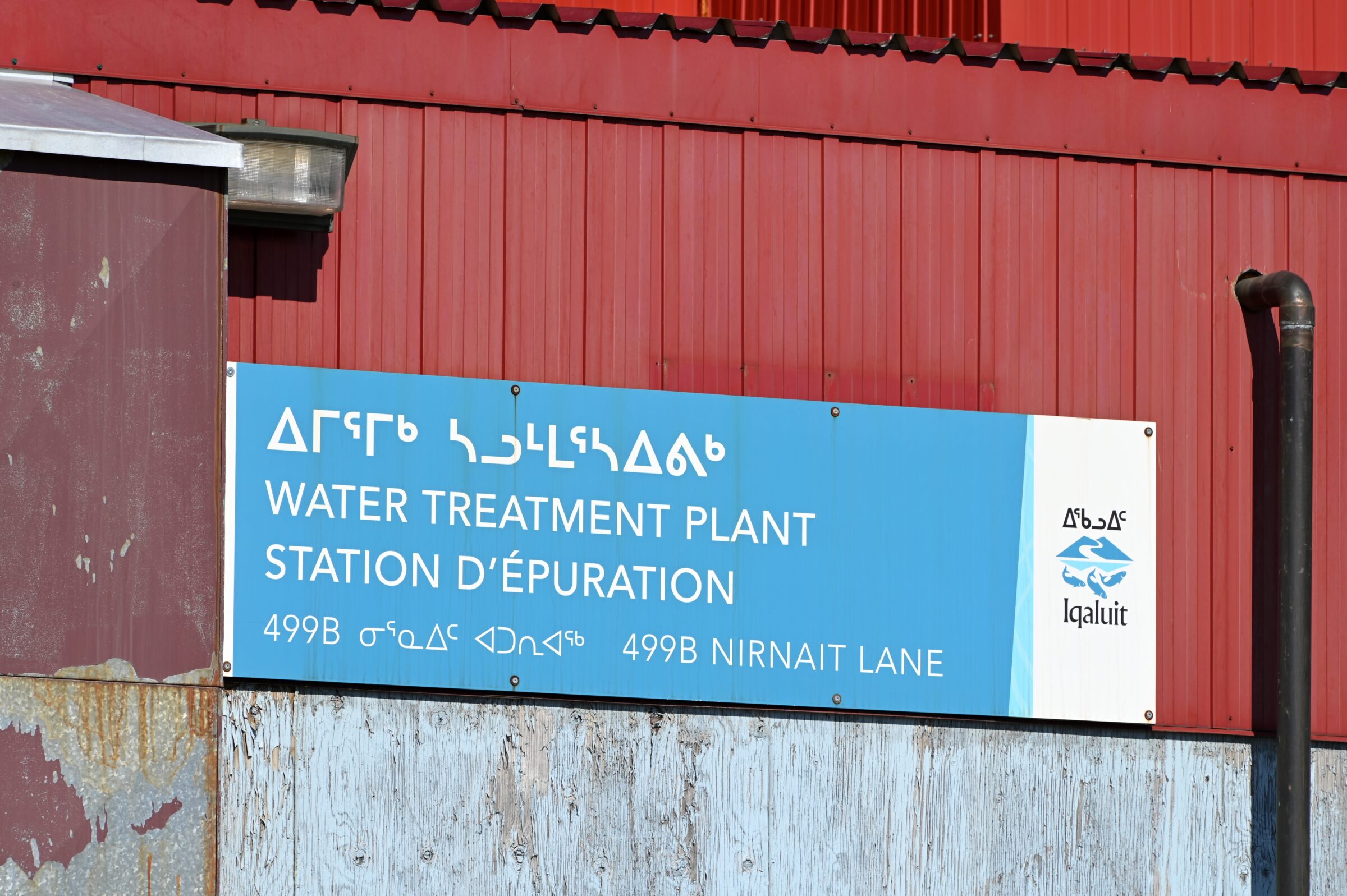
The Office of the Auditor General of Canada is planning an audit of Nunavut’s drinking-water management. (Photo by Mosha Folger)

The Office of the Auditor General of Canada is planning to examine how drinking water is managed in Nunavut, amid years of problems with the territory’s water infrastructure.
The audit is expected to be released in 2027, but its scope, methodology and timeline have not yet been finalized, wrote Vincent Frignon, a spokesperson for the auditor general’s office, in an email.
The review comes as Nunavut continues to face challenges maintaining reliable access to safe drinking water.
A 2024 report by Nunatsiaq News found that only eight of the territory’s 25 water treatment plants passed their most recent public health inspections without health or safety deficiencies. The other 17 had issues ranging from chlorine management and testing problems to inadequate operator training.
Five communities had no certified water-treatment operators at the time of those inspections, while Naujaat, Coral Harbour and Baker Lake were under public health orders to address deficiencies.
In addition, Gjoa Haven experienced a nearly seven-month boil-water advisory this year after a break was discovered in January along the six-kilometre water main that connects Swan Lake to the community’s treatment plant.
Kugaaruk’s water-treatment plant was disabled in December 2025 after seawater entered the system during an unusually high tide last December, prompting military assistance.
Pangnirtung declared a state of emergency in September 2025 after its water treatment plant stopped producing water.
The City of Iqaluit declared a state of emergency in late 2021 after fuel was detected in its water supply. The problem arose again in January 2022. Ultimately it would take 18 months for the city’s water plant to come back online in April 2023.
People in Sanikiluaq haven’t been able to drink their municipal water since 2016 because of salinity concerns.
Boil water advisories remained in place as of Tuesday in Igloolik, Pond Inlet and Arctic Bay.
Back in Iqaluit, the city announced an emergency water shutdown in the Plateau area on Tuesday because of an unspecified urgent infrastructure issue, which has also triggered a precautionary boil-water advisory for affected residents.
The territory’s 2023 Drinking Water Strategic Framework estimated that addressing its water-treatment infrastructure deficit would cost $605 million.
The document also called for updated drinking-water regulations, more training for water plant operators and a certification board.
A lot of us are looking forward to the results of the audit. By and large, I think it will tell us what we already know, namely that:
1. The Government of Nunavut’s well-intentioned introduction of leading edge Guidelines for Canadian Drinking Water Quality have had unintended consequences. The standards have a high benchmark which a lot of Nunavut municipalities cannot meet.
2. Nunavut just does not have qualified water treatment plant operators and managers whose qualifications meet the requirements of the Guidelines for Canadian Drinking Water Quality. As such, it is not surprising that a lot of the municipalities in Nunavut or the Government of Nunavut itself, do not have qualified staff.
3. There is a job advertisement that has been on the GN job site for more than two years (https://www.gov.nu.ca/en/jobs/waterwastewater-systems-manager-re-advertisement/163). It keeps being re-advertised because there are no takers. Why? Either because the pay is too low to attract a good water treatment professional to Nunavut or there are just too many lucrative jobs elsewhere to entice anyone to want to come to Nunavut.
4. Nunavut needs to establish its own “made in Nunavut” water treatment standards – not watered down (pun intended) but practical and relevant to our unique circumstances. Largely, Nunavut communities have pristine water sources (except Sanikiluaq). It should therefore be possible to have a simplified water treatment process.
5. The elephant in the room – we should train our own young people – create an interest in the water treatment profession. If we trained Inuit to be water professionals, our problems will be cut in half. Inuit young people need to want to go to school. The Government must create a tailor made training program (like the Law Program of 6 years ago).
6. Infrastructure – Gjoa Haven is a typical example where the waterline broke on January 15 in minus 60 degree weather. It is not possible to repair the line in those temperatures. That is just the reality of Nunavut. They had to wait for the ground to thaw.
7. Shortage of trades – In Gjoa Haven for example, the GN had to take over the operation to find qualified trades to attend to the infrastructure repairs. We just do not have qualified trades. As a result, the GN and hamlets end up having to hire expensive contractors who charge what they want.
8. Lack of urgency. In Nunavut, we have embraced this culture where nothing really matters. In Ontario, people went to jail during the Walterton water scandal.
Many good points. Interesting to note that drinking water standards in Canada – which are resulting in high costs and complexity of new WTPs, were a result of the Walkerton tragedy.
Despite the ‘pristine waters’ the water is still surface water and there is a range of water quality issues across the territory.
The GN would need to develop and approve standards specific to Nunavut. Although that might even produce a more practical and equally safe water treatment regime in Territory …. I don’t see anyone stepping up to say they don’t want to meet ‘Canadian Standards’ that were developed post Walkerton.
I on the other hand cant wait for the positive review the AG will find. The amount of money spent on water treatment is shocking, I did once suggest the reverse osmosis in every house, which the Gov’t did use in a Northern Quebec community. The system plus lifetime filters is still cheaper than putting 20 million dollar plants evrywhere for so few residents. Do the math GN, I know its not our stong suit but most of us workers us AI anyways.
The problem is not isolated to the treatment plants. Water is transported in tanks trucks, hoses are dragged through who knows what, water is pumped into 500 gallon or greater holding tanks which are located in heated rooms often also occupied by a boiler or furnace. The warm water promotes bacterial growth. Tanks for the most part do not recieve scheduled cleaning and disinfecting. So there are many issues to be addressed. Mud in the bottom of water tanks and slim floating at surface have been frequently observed.
New water filtration plants are being built costing over a million dollars. Part of the build cost is to train locals. To operate the plant. The contractors leave the local operators take over. And with in a short time. The water test come back with unsafe to drink notice. What does that tell you. People don’t show up for work or they don’t know how to operate the plant.
Dear sir. I am a aboriginal trainer and trouble shooter. I have trouble shot all 47 first nations in alberta and completed educational courses and hands on plant training. After reading all of this I think I might be a good possible resourse for this situation.
A iam a metis desent