


Ottawa making ‘not very sexy’ progress on Arctic military hubs: researcher
Ken Coates says he’s an optimist that government is serious about building up Arctic defences
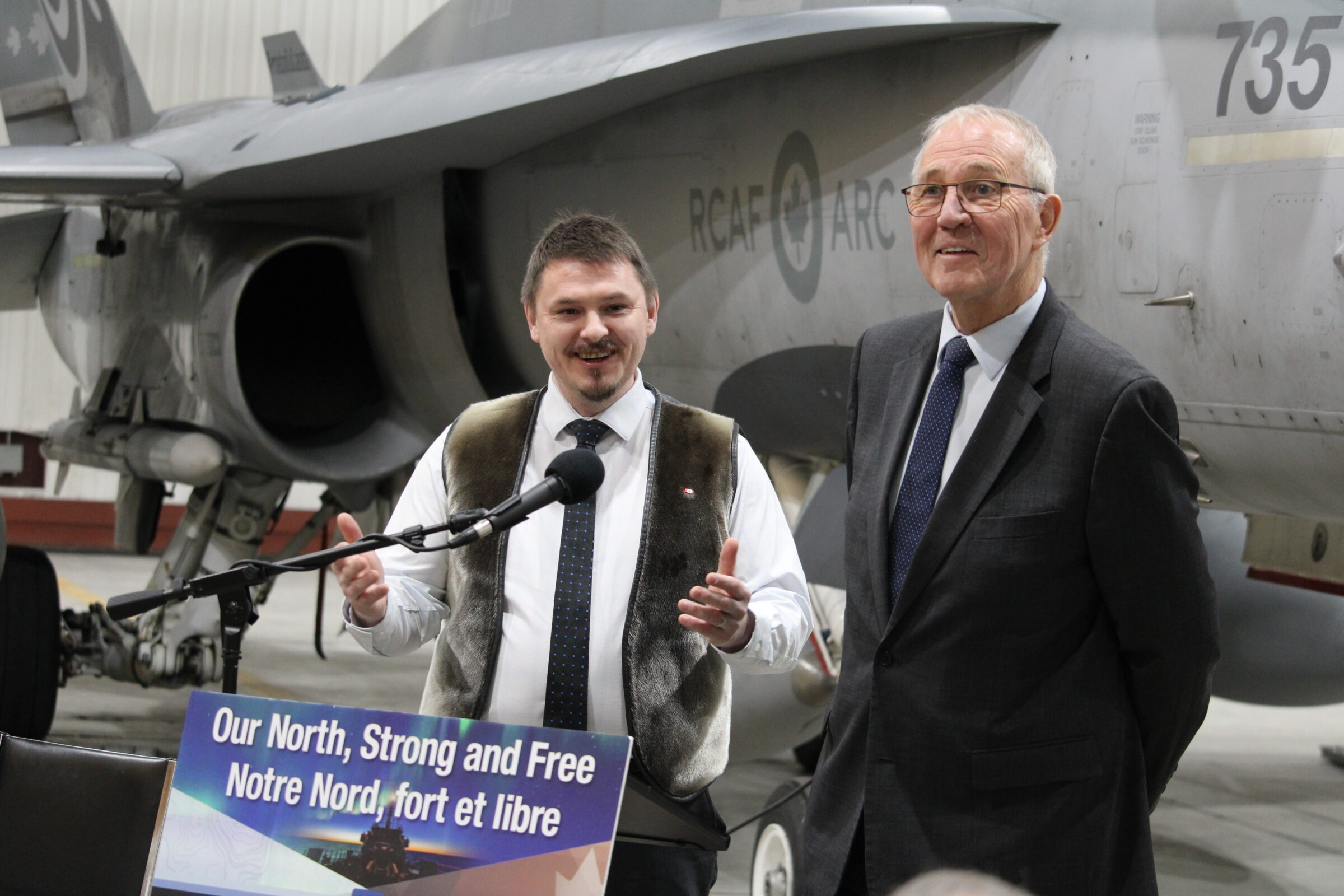
Former defence minister Bill Blair, right, announces in March 2025 that Iqaluit will host one of three planned northern military support hubs. With him is former Nunavut premier P.J. Akeeagok. (File photo by Arty Sarkisian)

For decades, federal politicians would come North promising to boost Arctic defence at election time only to abandon those plans once in office.
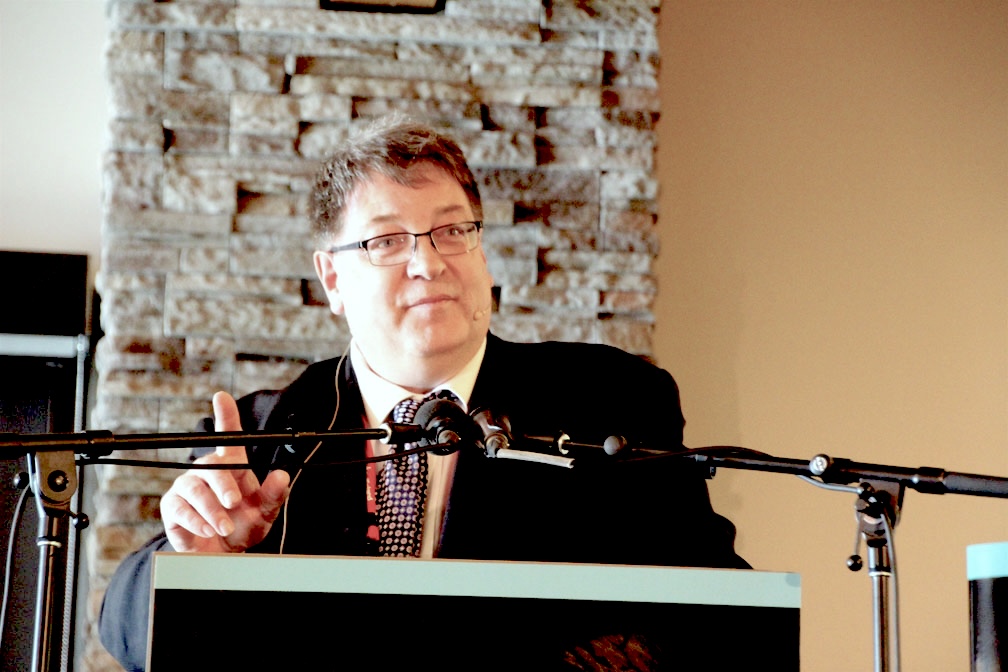
Researcher Ken Coates is more optimistic about the federal plan to build military operational support hubs in Iqaluit and two other Arctic locations than he was a year ago. (File photo by Beth Brown)
“They get pictures taken next to an iceberg, and then they go down south and forget the North for another five years. That’s been the pattern for a long time,” said Ken Coates, a senior policy fellow in northern and Canadian issues with the Macdonald-Laurier Institute, an Ottawa-based think tank.
But not this time.
Coates shared his thoughts recently in a phone interview from Whitehorse, where he was attending Arctic Summit 2026, an annual forum for politicians and other industry leaders to talk northern sovereignty and security.
“From being a skeptic last year, I’m actually sort of more of an optimist now,” he said.
“We’re going to see development.”

Arctic defence was a major campaign issue during the 2025 federal election with Liberals, Conservatives and New Democrats all outlining their Arctic defence policies and pitching themselves as the best defenders of the North.
The victorious Liberals’ plan was to build three northern operational support hubs for the military.
It’s now been a year since then-defence minister Bill Blair announced the hubs will be located in Iqaluit, Inuvik and Yellowknife to serve “critical military objectives” in the Arctic.
These hubs were a major pillar of the previous federal government’s $81.1-billion defence policy, introduced in 2024. The facilities would include airstrips, logistics facilities and stockpiles of spare parts to “enable the military to better assert Canadian sovereignty,” the policy said.
The Canadian Armed Forces currently has four operational support hubs — all of them overseas — in Germany, Kuwait, Jamaica and Senegal.
The Arctic facilities, which Coates expects will each have about a dozen permanent workers and some temporary fly-in personnel, will serve as training grounds for Canadian Armed Forces and support southern forces in their northern operations.

Coates said he was initially skeptical, thinking the plan would follow the fate of the long-promised Nanisivik refuelling facility near Arctic Bay which has seen multiple delays since it was announced in 2007. Its opening date remains in limbo.
Now, he believes the government will follow through with its military hubs promise.
The Department of National Defence said in December the operational support hubs project is expected to be complete in 10 to 20 years — but now those schedules are “out the window,” Coates said, noting a new sense of urgency.
In the wake of U.S. President Donald Trump’s threats to take greater control of the Arctic, things are moving faster.
“They haven’t given us a firm new schedule but, you know, the world is unfolding very, very quickly, and people are nervous,” Coates said.
“They’re not panicked, they’re just nervous.”
Few official updates to the $2.67-billion project have been provided, but more information will be released later in March, Second Lt. Cammeron Radford told Nunatsiaq News on Feb. 20.
Coates said the difference between the current push for Arctic defence and previous ones is the federal government’s “comprehensive approach.” It’s not only building military capabilities, but also new housing and infrastructure essential to supporting the armed forces.
“It’s not very sexy when you say, ‘In order to have a military presence in the Arctic we have to improve the sewer,'” Coates said.
Nunavut Premier John Main expressed a similar sentiment in January.
“We can’t have state-of-the-art military technology flying in the face of communities that are impoverished and in need of basic infrastructure,” he said, speaking alongside Yukon Premier Currie Dixon and Northwest Territories Premier R.J. Simpson.
Why did PJ not want to run again?