


‘I want to go home’: Forced relocation impacts Sanikiluaq more than 50 years later
Former residents of Belcher Islands’ South Camp moved north in 1970s under federal coercion
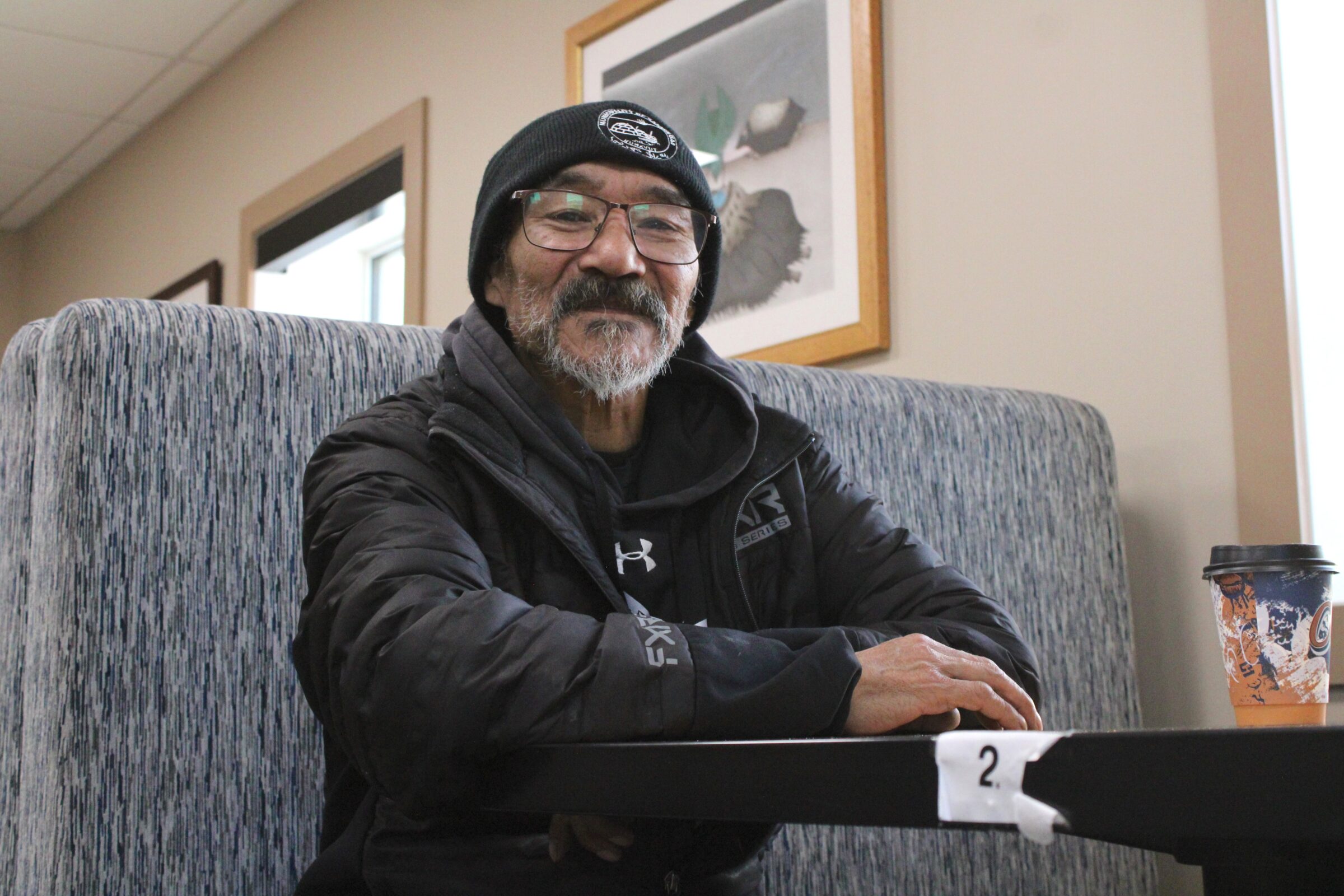
Jonasie Emikotailuk says he still feels out of place in Sanikiluaq. (Photo by Arty Sarkisian)

Sometime in the spring of 1970, eight-year-old Jonasie Emikotailuk along with a dozen other kids was taken on a trip from one end of the Belcher Islands to the other.
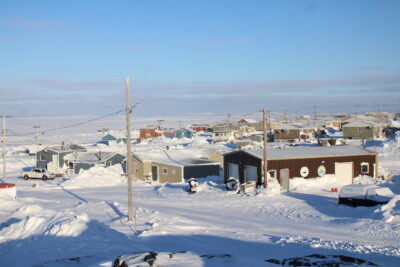
The impact of a forced federal relocation of Inuit from a camp on the southern tip of the Belcher Islands to Sanikiluaq in the north is still causing tensions in the hamlet, more than 50 years after it happened. (Photo by Arty Sarkisian)
The group, accompanied by several adults, didn’t have enough food or drinking water for the 70-kilometre journey.
“One of my buddies, he was so dehydrated his tongue turned black,” Emikotailuk said.
The Belcher Islands are an archipelago in the southeast of Hudson Bay. There used to be two main Inuit hubs on the islands — South Camp (Emikotailuk’s home) and North Camp (modern-day Sanikiluaq).
In the late 1960s, the federal government decided to shut down the South Camp and relocate its roughly 50 residents, including Emikotailuk, to the north.
Sanikiluaq was established as a hamlet shortly after, in 1976. Now as it turns 50, the community’s roughly 1,000 people have a lot to celebrate.

Sanikiluaq Inuit are unique in that they rely on eider ducks — not caribou — for clothing and tools. It’s a community of basketmaking and hard-to-beat beluga sausages. It’s also home to schoolkids who recently found themselves shooting for the stars, as they were among the few selected to pose questions to the astronauts on the Artemis II moon mission.
But for Emikotailuk, it’s a community he joined through federal coercion and intimidation.
A community where to this day, he doesn’t truly feel at home.
Inuit have inhabited the Belcher Islands for centuries, mostly in small camps scattered across the islands. Until the 1950s, the federal government provided few services to the island’s population.
In 1960, the government opened a school in South Camp, along with a hostel. These were later classified as a residential school by the National Centre for Truth and Reconciliation.
By the end of the 1960s, South Camp also had an Anglican chapel, a small co-op store and a power plant, according to the Qikiqtani Truth Commission.

“We had everything we needed,” Emikotailuk said. “It was home.”
But soon the two camps on Belcher Islands presented the federal government with a problem — an “Eskimo problem,” as Alan R. Marcus refers to it in his 1991 book, Out in the Cold.
Sparsely populated lands were hard to manage. This led the government to shut down smaller settlements, relocating their residents to centralized communities.
In the late 1960s, the federal government put “pressure” on Belcher Island’s southerners to move north. Some — like Emikotailuk’s parents — were promised a better home. Others didn’t understand that the move north was permanent.
“We didn’t even know we were relocating here,” Emily Takatak, one of those relocated, later told the Qikiqtani Truth Commission.

“We didn’t take any belongings. Even my babies didn’t have anything — nothing to comfort them. During the night, my children were cold.”
A lot of hunters were “compelled” to kill their dogs before moving because they wouldn’t fit in the canoes. Lottie Cookie told the commission that she was 15 when she watched her father kill his dogs ahead of the relocation.
While Emikotailuk’s parents moved to North Camp, he stayed at the federal hostel in South Camp for a few more years with about a dozen other schoolkids until they took that boat trip north in 1970.
The hostel’s supervising adults were not kind, he says.
“They hit me. And they hit me. They hit me right here,” he says, showing the back of his hands.
He also recalls suffering sexual abuse from one of the supervisors.
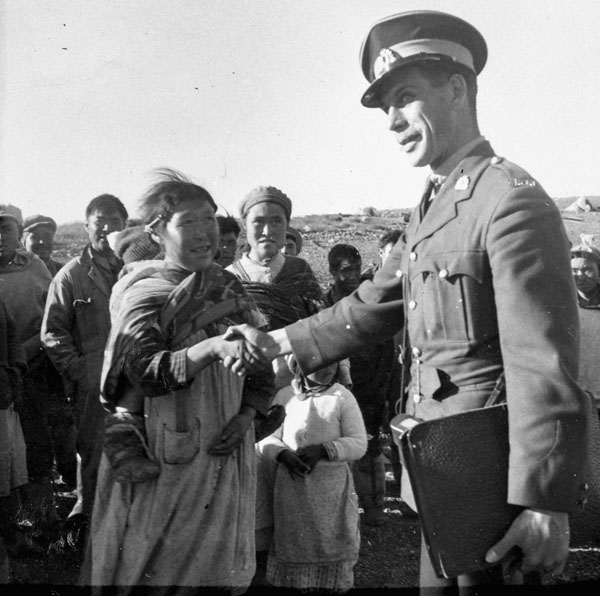
Locals on Belcher island meet an RCMP officer in 1949. (Credit: S.J. Bailey / Department of Indian and Northern Affairs / Library and Archives Canada)
In the past two decades, the federal government has issued multiple apologies for mistreatment of Inuit over the years, including in February 2025 when Gary Anandasangaree, northern affairs minister at the time, apologized for the forced relocation of Inuit from Kinngait to Dundas Harbour 80 years ago.
There was never a formal apology specifically for South Camp, but in 2019 former Crown-Indigenous Relations minister Carolyn Bennett issued an apology for all mistreatments of Qikiqtani Inuit between 1950 and 1975.
That apology included relocation of South Camp, department spokesperson Eric Head said in an email.
He didn’t say whether there are plans to make an apology for South Camp similar to the Dundas Harbour apology.
However, Emikotailuk, says he doesn’t care for federal apologies.
“My home was already taken from me,” he said.
To this day, there are tensions in Sanikiluaq between southerners and northerners, said Johnny Appaqaq, the hamlet’s mayor and one of the relocatees.
But he declined to talk further about it.
“Just leave me out of it,” he said in an interview in January.
As for Emikotailuk, who is 64 years old now, he still feels out of place in Sanikiluaq.
“I want to go home,” he said.
His dream is to one day build a cabin in what used to be South Camp and move back.
“It was my spot. And it was taken from me.”
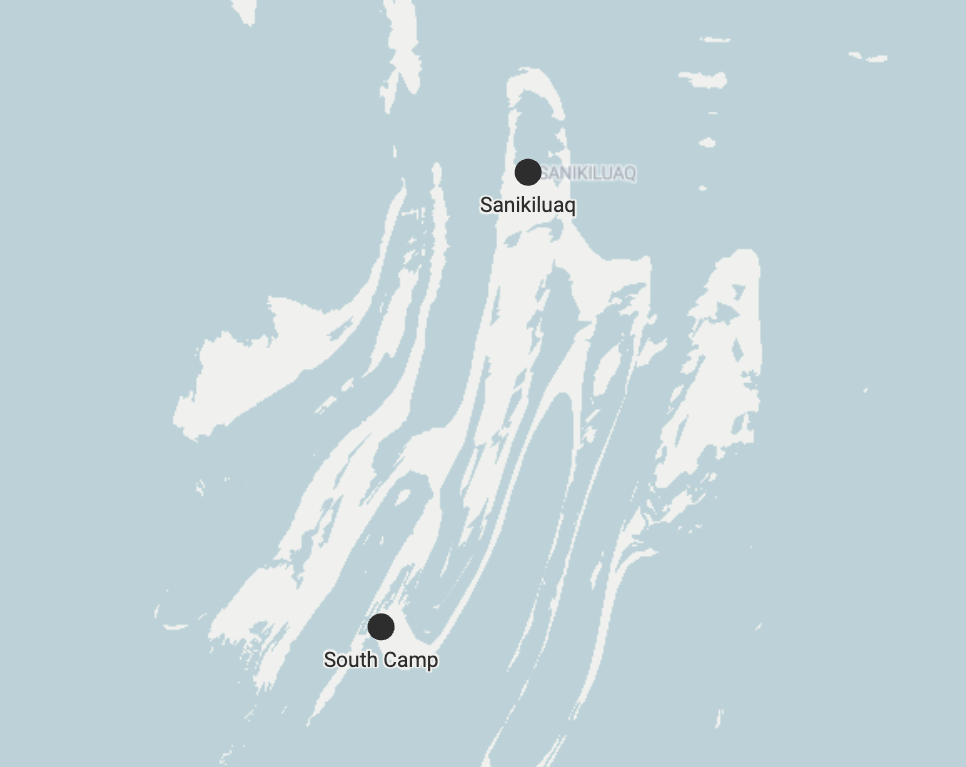
In the 1960s, Belcher Island had two main hubs: South Camp and North Camp (modern-day Sanikiluaq) that were about 70 kilometres away from each other. (Map by Nunatsiaq News)
Naglingnaq. Thank you for sharing your story and I hope you find healing and get the cabin at your home area. LOVE always wins.