


News quiz Sept. 12 | Stranger than fiction
What do you remember from the headlines?
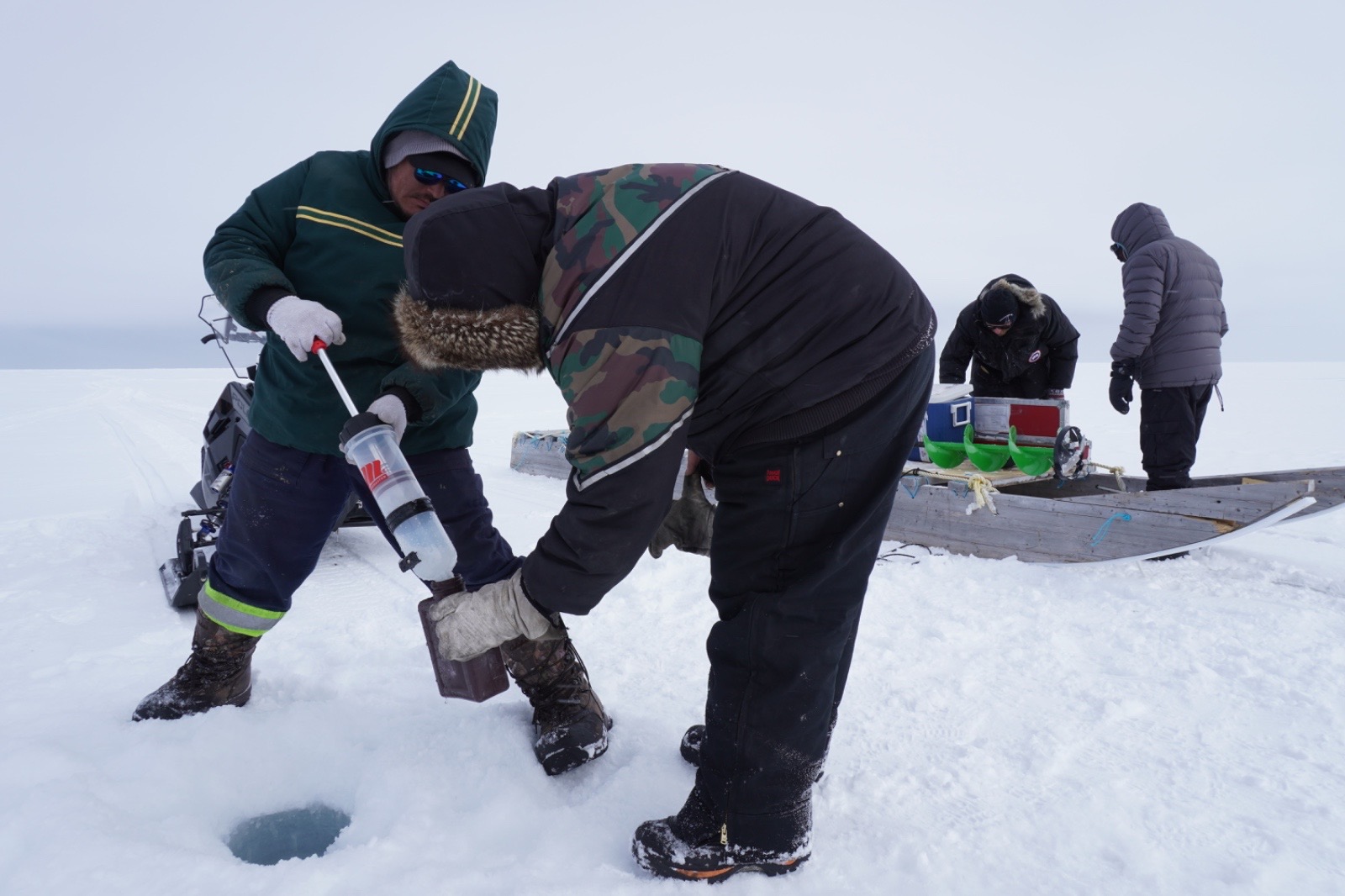
These scientists are studying an oil-loving creature near Chesterfield Inlet. What is it? (Photo courtesy of Masha Kardashevskaya)
It’s quiz time! Let’s roll.
1. An Ottawa-based non-profit is paying Nunavut teens to do what while scrolling their social media feeds?
A. Report the types of advertisements they are seeing.
B. Fact check viral social media posts.
C. Like and share posts about from the organization about media literacy.
2. Nunatsiaq News introduced readers to a new northern correspondent last week. What is different about her?
A. She is a licensed pilot.
B. She is a high school student.
C. She’s not human. She’s one of 121 AI “correspondents” that repackages existing news stories for a website based out of Hong Kong.
3. Oil spills are bad for the environment, but scientists are in Chesterfield Inlet studying one type of creature seems to benefit from it. What creature is that?
A. Sea cucumbers seem to love oil and grow to massive sizes when exposed to it.
B. There are naturally occurring microbes that feed off of oil.
C. Oil adheres to plankton floating in the water, making them shimmer, which makes them more visible to predators, like whales.

4. A new development in Grise Fiord is making it easier for people to determine when it’s safe to travel. What is it?
A. Better radar and satellite imagery helps determine when precipitation is coming.
B. A new weather station about five kilometres east of the community shows real-time conditions.
C. A high school student has taken up amateur meteorology as a hobby and is providing local weather reports that residents say have been extremely accurate so far.
5. A sea can full of non-perishable food arrived this month in Igloolik, from a New Brunswick-based non-profit. How much does it cost to ship a sea can on the sealift?
A. $10,000
B. $12,000
C. $14,000
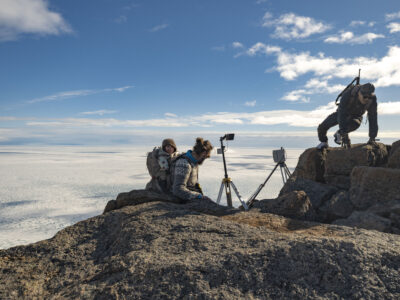
David Didier, left, a geography professor and director of the Northern and Arctic Coastal Research Lab, with his child strapped to his back, and Terry Noah, owner of Ausuittuq Adventures, install a live timelapse station near Grise Fiord on July 8. The automated camera system set up near the coastline helps researchers monitor the sea ice conditions. (Photo by Anne-Marie Dubé)
Answers:

1. B — Teens aged 13 to 19 can apply to learn different fact-checking skills like reverse image search and fact verification and use those skills to fact check viral posts that pop up on their social media accounts. They earn $150 for their first analysis, then $100 for subsequent fact checks.
2. C — Leah Qammaniq is an AI “correspondent” who republishes copyrighted news content and renders AI images to go along with it.
3. B — Scientists are in Chesterfield Inlet studying microbes that feed off of oil. Some new species have been discovered during the study, said one researcher, and local Inuit are being invited to help name these new species.
4. B — A new weather station outside the community allows people to check real-time conditions before heading out onto the land. It’s part of a larger project studying coastal erosion and water conditions around Grise Fiord.
5. B — The sea can, which is filled with approximately $50,000 worth of food, costs $12,000 to ship, said Rick Maher, who runs the non-profit group A Tapestry of Kindness with his wife Linda Maher. The group gets some funding help from Nutrition North Canada for the project, which aims to send two sea cans per year to northern communities.

(0) Comments