

Nunavik school board demands province apologize for scathing report
Kativik Ilisarniliriniq says it’s making progress on the report’s recommendations despite a lack of communication with the government
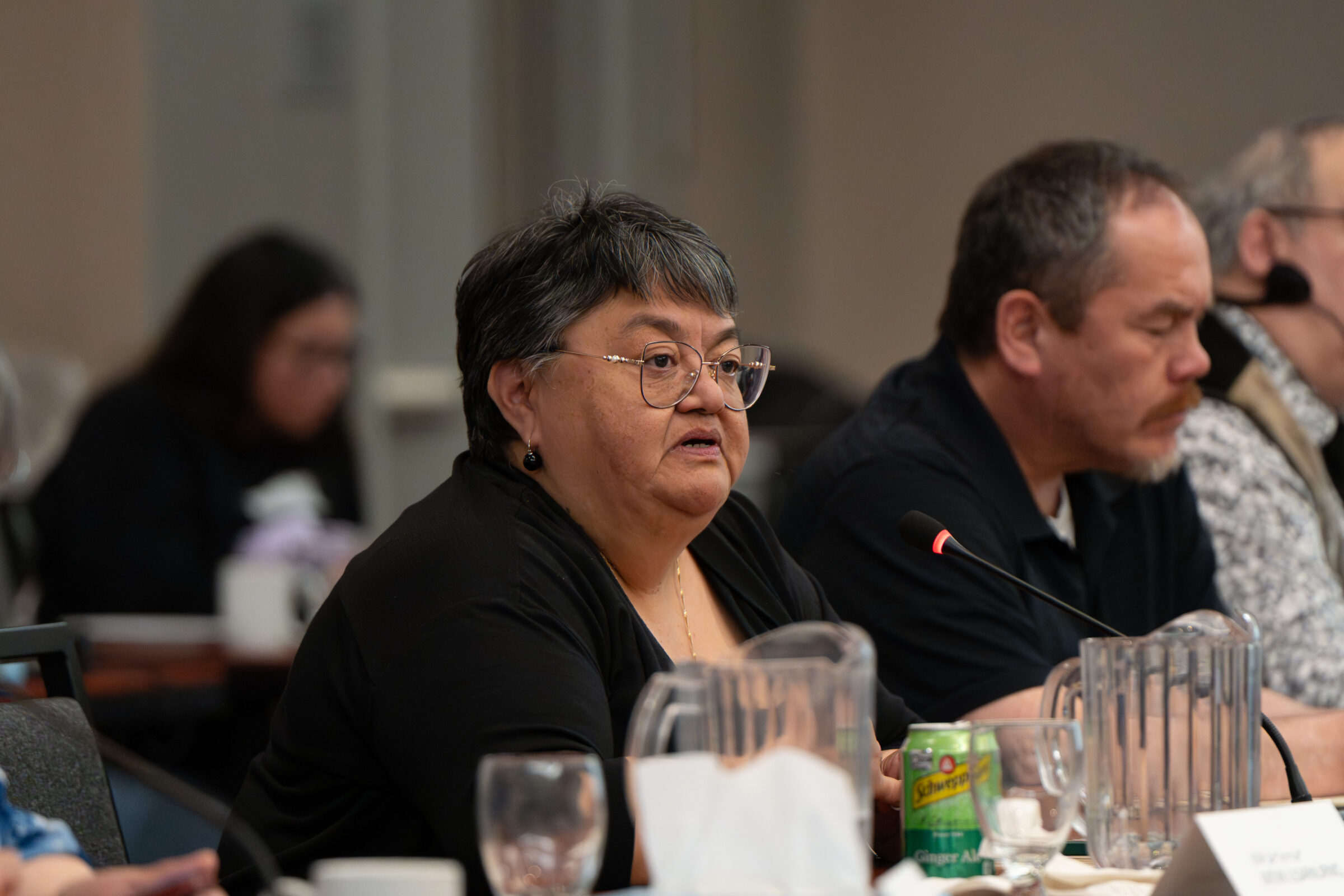
Kativik Ilisarniliriniq director general Harriet Keleutak spoke out against the Quebec Ministry of Education report on the school board’s finances. (Photo by Cedric Gallant)
Two years after the provincial government did administrative inquiry into the Nunavik school board’s deficit, Kativik Ilisarniliriniq is demanding an apology from the Quebec government.
At Nunavik’s all-organizations meeting, held in Montreal in mid-April, the school board’s director general Harriet Keleutak expressed frustration with the report and demanded an apology for its critical language and insensitivity to the North’s “unique” situation.
“We were being accused of mismanaging our funds. They had an expert, who … became an expert after being [up North] for three months. I’ve been living in the south for many years now. I think I’ve become an expert, too,” Keleutak said in Inuktitut.
The Ministry of Education’s internal affairs directorate, which conducts administrative investigations into school boards, mandated the investigation.
That report, published in July 2024, said the board’s senior administration “failed to be vigilant” with “the significant financial resources made available to them” and that the commissioner’s council “seems to be more focused on political issues than on financial ones.”
It also noted that KI’s employee turnover rate is high. Some 47 per cent of its staff are replaced annually.
However, the report acknowledged that a lot of the issues went beyond “the scope of a single school board.”
The school board’s council says it has addressed some of the investigation’s recommendations. It has implemented Sivumuattiit, a one-year planning process to “to support Nunavik students on their path to success,” according to Kativik Ilisarniliriniq’s website.
KI spokesperson Jade Bernier says the Ministry of Education has not been in contact with the school board despite the board’s progress.
“Despite multiple followups, we have unfortunately no concrete update as to where the approval process is at regarding Kativik Ilisarniliriniq’s response to the findings of the investigation, action plan, support proposal, funding agreement and apology letter,” Bernier said.
“This reinforces the importance of clearly framed, proportionate processes that support student success while respecting the organization’s mandate and reputation,” KI president Sarah Aloupa said.
Nunatsiaq News asked the Ministry of Education for comment, but it did not reply before publication.
Childish response from KI. Do better with your funds. Be accountable to the tax payers.
My KI/ Qc ministry high school diploma is toilet paper. Useless.
The arrogance knows no bounds.
It’s hard to support the call for an apology from Kativik Ilisarniliriniq when the findings of the report point to serious concerns that directly affect Nunavimmiut—especially children and their right to a stable, quality education.
Rather than asking for an apology, KI should be taking full accountability and offering one to Nunavimmiut. The report clearly highlights issues around financial oversight and leadership focus. When significant public funds are involved, there is a responsibility to manage them carefully and transparently. A lack of vigilance in this area is not a small issue—it has real impacts on classrooms, resources, staffing, and ultimately on students’ futures.
The high staff turnover alone—nearly half the workforce changing each year—speaks to deeper systemic problems. This level of instability affects continuity in education, student support, and community trust. These are not just administrative challenges; they are issues that impact children every single day.
While it’s true that Nunavik faces unique challenges, that reality should strengthen accountability—not weaken it. The context of the North should be used to advocate for better support and stronger systems, not to deflect criticism.
Nunavimmiut deserve transparency, responsibility, and leadership that puts students first. An apology from KI acknowledging past shortcomings, along with clear, measurable actions for improvement, would go much further in rebuilding trust than asking for one from the government.
Accountability? How dare you