


Supreme Court delivers landmark decision on Indigenous offenders and victims
Canada’s top court ruling upholds decision to reduce Mi’kmaw’s man sentence
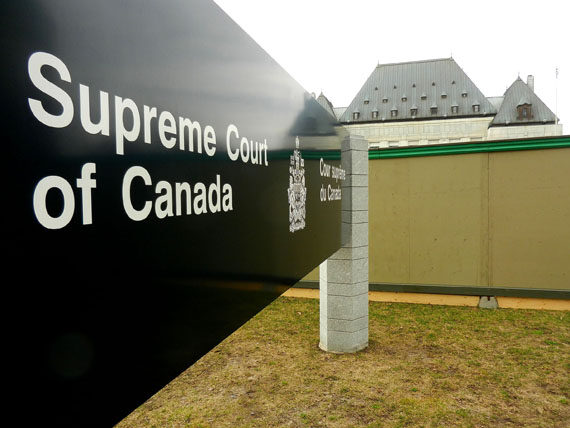
The landmark judgement, R. v. Cope, concerns a Mi’kmaw man from Nova Scotia who pleaded guilty after violently assaulting his intimate partner, a Mi’kmaw woman, in 2021. (File photo)
A Supreme Court of Canada decision on Friday has clarified the factors that judges should account for when a defendant and victim are both Indigenous.
The landmark case, R. v. Cope, concerns Harry Arthur Cope, a Mi’kmaw man from Nova Scotia who pleaded guilty to assaulting his partner, a Mi’kmaw woman, in 2021.
The Supreme Court weighed in on a trial judge’s decision to sentence Cope to five years in prison and the Nova Scotia Court of Appeal’s decision to reduce that sentence to three years.
On Friday, the Supreme Court upheld the Nova Scotia Court of Appeal’s ruling, which accounted for Cope’s mental illness and substance use.
“The sentencing judge should have linked the mental health factor to the offender’s moral blameworthiness on the aggravated assault offence, but failed to do so,” wrote Justice Michelle O’Bonsawin, writing for the majority of the judges. “The court of appeal was therefore correct to intervene and it arrived at a just and appropriate sentence.”
Four of nine judges sided with the Nova Scotia provincial court’s original ruling, which dismissed recommendations from community members who proposed no further jail time and opted for a treatment program instead.
Anne Crawford, an Iqaluit lawyer who handles family and domestic violence cases, said the Supreme Court judgement uplifts the role that Indigenous victims, their families and their community should play in criminal sentencing.

“It provides emphasis on the value of women, mothers and partners,” said Crawford, who has previously worked as a defence lawyer. “I think it’s part of a broader shift in Canadian society towards accountability for offenders.”
That shift includes changes to the Criminal Code that came into effect in June, she said. The law now defines murders “that occur within a pattern of coercive” behaviour toward an intimate partner as first-degree murders, and it asks courts to consider life imprisonment when somenone commits manslaughter within such a pattern.
“I don’t think our courts come anywhere near addressing what victims need,” Crawford added about the landmark judgement. “(But) I do think it comes closer to holding offenders to account.”
Twenty intervenors, including provincial and community prosecutorial services, legal aid centres, and organizations representing lawyers and Indigenous women, all participated in the hearings, held Dec. 11 and 12 at the Supreme Court in Ottawa.
Philippe Boucher, a doctoral candidate in legal studies at Carleton University, serves as a Gladue report writer, which provides judges with a portrait of an Indigenous offender before they decide the length and severity of a sentence.
He said the court’s message is that condemning violence doesn’t always require longer prison sentences.

The Supreme Court judgement also provides guidance on how judges should balance their responsibility to avoid imprisonment when offenders are Indigenous with protecting Indigenous women and girls, Boucher said.
O’Bonsawin proposed a three-step test. Judges must first assess the gravity of the offence and responsibility of the offender in light of the Indigeneity of both the offender and the victim.
Second, they must identify what the sentence is meant to achieve while considering denunciation and deterrence, a key addition to the Criminal Code after the National Inquiry into Missing and Murdered Indigenous Women and Girls.
Third, they must chose a proportionate sentence with everything in context.
“What the Supreme Court said this morning is that denunciation and deterrence doesn’t automatically mean a custodial sentence, it doesn’t mean prison, and it can also be another alternative to detention,” he said.

(0) Comments