


Virtual museum showcases Igloolik artifacts
Exhibit contains objects brought south to Laval University in the 1960s and 1970s
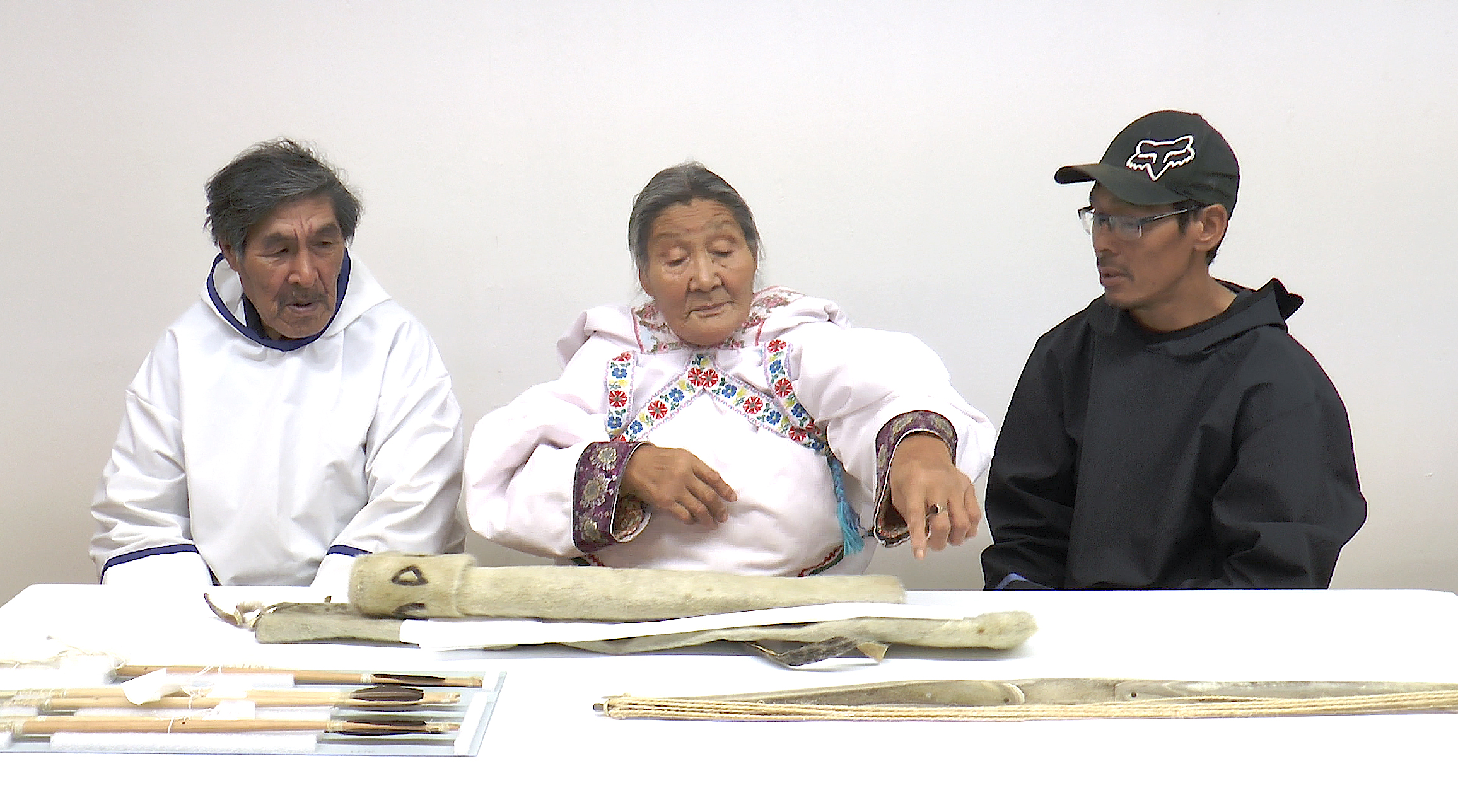
Igloolik elders Natalino Piugattuk, left, and Deborah Qaunaq, centre, chat with Laval University representatives, via interpreter Roland Taqtu, about Inuit objects that have been at the university for more than 50 years. They are just a few of the items included in a new virtual museum featuring a collection of close to 60 items from Igloolik. (Photo courtesy Inuit Worlds project)
This story was updated on Wednesday, April 29, at 4:20 p.m. ET.
A virtual exhibition that opened April 1 aims to bridge time, geography and culture between Inuit elders and youth.
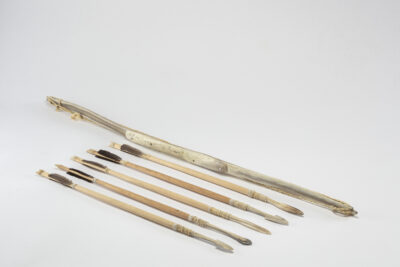
Seen here, gear for bow hunting which includes a bow made from pieces of caribou antler and nails. Prior to having access to metal, walrus whiskers or threads of caribou sinew were used to hold the bow to together. These arrows are made from wood, but they were often made of caribou antler or bone since wood wasn’t readily available. (Photo courtesy of Inuit Worlds)
Titled Inuit Worlds from Past to Present, it was created by Laval University in Quebec City in collaboration with Nunavut Arctic College and Iglulik High School in Igloolik.
The exhibition includes objects gathered by renowned anthropologist Bernard Saladin d’Anglure, said Valentine Ribadeau Dumas, a research associate, at the university, on relations with Inuit societies, in an interview Friday.
D’Anglure, who worked in the Arctic for 50 years, collected approximately 350 objects in the 1960s and 1970s from Nunavut and Nunavik. Of those, approximately 60 were identified as having come from Igloolik and are included in the exhibit.
Before he died in February 2025, d’Anglure shared information about the objects and met with elders.
“Our goal was to create links between these objects and the communities,” Ribadeau Dumas said.
Some of the artifacts were displayed in an exhibit in 2020. In May 2022, Ribadeau Dumas’s team went to Igloolik with a few of the items to see if there was any interest in showcasing them.
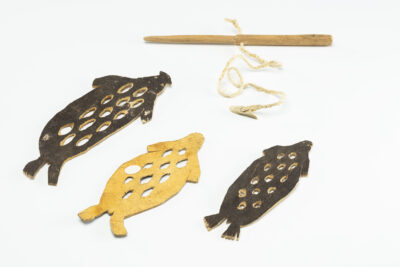
Primarily played by boys, this seal-hunting game (nattirasunguarutiit) recreated harpooning a seal at its breathing hole (aglu). One contestant had to “hit one of the holes on the seal, while another player moved the seal bone or the pieces of sealskin,” according to the museum’s website. (Photo courtesy of Inuit Worlds)
Local Inuit wanted to use the objects to “foster connections between generations” and to “create a sustainable tool to teach about the richness of the history and culture,” Ribadeau Dumas said.
Many of the artifacts are practical tools that were replaced by modern equivalents or alternatives. But their names, as well as how to make them, had been locked away in the minds of elders.
When researchers brought the pieces to the community, it was akin to a rediscovery, said Jack Haulli, an instructor at Nunavut Arctic College’s Igloolik campus.

Haulli, who served as the project’s main local collaborator, said the discussions he had with elders brought back many memories.
The conversations reminded him of lessons his grandfather used to tell him “which I kinda forgot over the years. I’m not going to forget it this time.”
Haulli hopes younger people will learn from the exhibition and take up crafting these rediscovered objects. After all, the virtual museum uses technology to pass on elders’ knowledge to younger generations.
“Because sooner or later, the people with words will not be here,” he said.
The exhibit is available in English, French and Inuktitut.

Correction: This story has been updated to correct Valentine Ribadeau Dumas’s surname and position, as well as when the artifacts were displayed in an exhibit, Jack Haulli’s role in the exhibition, and with whom elders Natalino Piugattuk and Deborah Qaunaq were speaking.
gathered…..or stole items??