


Waiting for a plan
Ottawa, GN and NTI say there’s more work to do … but how long will it take?
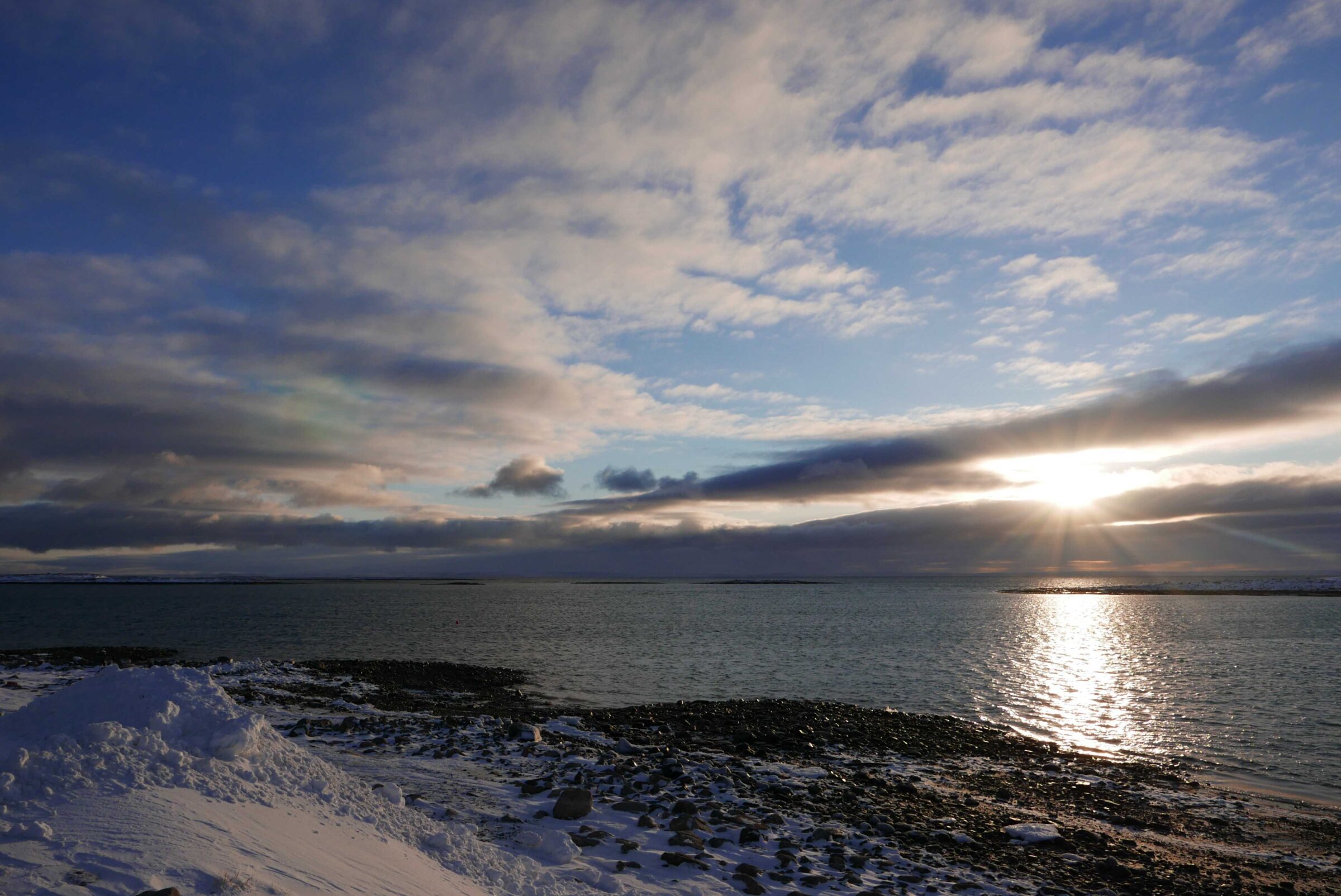
Land near Naujaat would have been included in the Nunavut Land Use Plan, which the Government of Canada, the Government of Nunavut and Nunavut Tunngavik Inc. rejected on June 3. (File photo by David Venn)

An astute reader pointed out the irony that Nunatsiaq News’s homepage on July 3 had a news story about the rejection of the Nunavut Land Use Plan as well as a feature about an upcoming production of the play Waiting for Godot in Inuktitut.
Waiting for Godot is a famous play by Irish writer Samuel Beckett. Artist Tatanniq Idlout translated it into Inuktitut and started holding auditions this week for a production to hit the stage next spring in Ottawa.
In the play, two characters spend their days waiting for a God-like figure named Godot, whose arrival, they believe, will save them from their suffering. But Godot never arrives.
That situation might sound familiar to those who have been waiting 16 years for the finalized Nunavut Land Use Plan, a document that would guide and direct resource use and development in the Nunavut Settlement Area.
Nunavummiut recently learned the federal government, the Government of Nunavut and Nunavut Tunngavik Inc. had rejected the latest draft of the land use plan.
It has been three years since those decision-makers received the draft land use plan, which was prepared and recommended by the Nunavut Planning Commission, the organization responsible for the development, implementation and monitoring of land use plans in the territory.
Adopting a land use plan was one of the requirements of the Nunavut Agreement in 1993.
The announcement that three organizations whose approval of the plan is needed had rejected it came in a news release on July 3 — a Friday afternoon at 5:10 p.m.
You don’t need to be a hardcore cynic to see that as a deliberate strategy to avoid scrutiny.
Unfortunately, it has become common for governments and other public organizations to mete out announcements late in the day — especially on Fridays and especially when it’s a contentious issue they’d rather not have to answer questions about.
That tactic is beneath governments that are supposed to serve the public, and beneath NTI, which exists to ensure promises made to Inuit under the Nunavut Agreement are kept. But that’s a separate issue.
Their joint statement said the plan “cannot be accepted at this time, as currently drafted.” They concluded “there remains further work to do” in conjunction with the commission.
But the signatories — Ottawa, the GN and NTI — didn’t elaborate on what more needed to be done or how long that might take. Nearly a week later, a Nunatsiaq News reporter was not able to get a representative of any of the three organizations to address those questions.

They did, however, document their concerns about the draft plan in the planning commission’s public registry. They cited the fear that the plan could strip regional Inuit organizations of the right to manage their own lands as a reason to turn it down.
So it’s encouraging that at least the reasons are spelled out for anyone who wants to wade through 196 pages of documentation (in four languages) on the public registry’s website. It’s all right there … hidden in plain sight.
What Nunavummiut deserve is a simple, straightforward explanation of what work still needs to be done and how long it will take.
In the meantime, Nunavut is waiting for a plan.
Imagine if you will, the ever elusive, very rare NLUP document floating out in the Nunavut landscape. Free as the wild animals that roam the vast territory. This NLUP document, rarely seen or heard from over a 16-year period, except every 3 or 4 years. Then it inadvertently gets spotted by some Nunavummiut on a Friday afternoon in July, who were out taking advantage of summer on the land. They think. WOW! That thing actually exists? We only ever heard stories about it and rare sightings told to us by elders.
Then they realize, while looking at each other, as they rub their eyes in disbelief, as it disappears from sight; that maybe they really didn’t see it after all….or maybe, just maybe, it’s a reminder to them of how utterly incompetent NTI, GN and Feds can be.
Corey rather than lamenting that the three signatories declined interviews, why not do what journalists are supposed to do…..dig into the records?
This wasn’t a backroom decision. The detail submissions were public.The reasons for the recommendation and the decision are all there for anyone willing to read them.
Instead, we’re told there isn’t enough because no one would provide you with fresh quotes.
Which is a bit ironic.
You also in previous editorials when governments release too little information, criticize them that they’re not transparent enough. When hundreds of pages of public documents, reports, and hearing materials are available, suddenly it’s “too much” unless someone summarizes it to you in a phone interview.
The role of a newspaper isn’t just to collect quotes! It’s to analyze the public record and explain it to readers. If the answers are already sitting in publicly available documents, perhaps the better editorial would have been a detailed summary of why the decision was made instead of another column complaining that nobody returned your phone call.
Sometimes the story isn’t hidden. Sometimes it just requires reading the file!
The Nunavut Land Claims Agreement calls for “plans” not a singular Nunavut-wide plan. It requires sub-regional plans. Unfortunately, the reference to a “plan” within the clauses have been misinterpreted to mean a singular plan when it actually is referencing a generic plan. Nunavut does deserve land use plans but people need to understand that Nunavut is geographically expansive and that the negotiators had intended for sub-regional plans. The Lancaster Sound Land Use Plan was pre-ratification and was adopted as a Plan after. Work was underway for a West Kitikmeot Land Use Plan but was shelved due to it being too much of a political hot potatoe. The Grays Bay Road was just being mentioned, other exploration camps were advanced and caribou herds were the topics of discussion that basically put everyone concerned at an impasse. Since the Nunavut Planning Commission’s inception millions and millions have been spent. For what!? The NPC needs to be the bridge builder and not the one that creates rifts. Taima.
There have been times that the NWMB, NIRB and NWB have made decisions or recommendations in their areas that were not very popular in various and sometimes opposing sectors of Nunavut society.
At other times, the manner in which these Boards conducted their business has been open to criticism. Decisions made by these boards have also been rejected by responsible Ministers.
When those things happen, our trusty northern news media is quick to pick up and report on these matters. And, if there is even a hint that the NWMB, NIRB or NWB might have been off base, these opinions see the light of day.
However, faced with an almost 30 year unbroken history of the NPC being unable to get its plans approved, it is interesting to me that the focus today is on faulting those generations of bureaucrats and Inuit leaders that have had the misfortune of having to decide on NPC’s work both recently and over the decades.
The NPC’s first work was to try unsuccessfully to produce a West Kitikmeot Land Use Plan. These failures caused governments and Inuit to tell the NPC to try a reset; develop a high level Nunavut Land Use plan instead. The first unsuccessful product of this new effort was in 2016.
Each version thereafter has been bigger and more complex; straying further and further from their initial instructions to create a General Land Use Plan that would provide plenty of planning room for future regional and sub-regional plans.
Truly, Nunavut is owed approved Land Use Plans. It is the NPC’s job to deliver these. The NPC is the common factor in all these years of rejections by both government and Inuit, who hardly agree on anything. This basic fact is not reflected in this News Story.
It strikes me that if these things were happening in relation to any other Public Board in Nunavut, there would be at least some discussion of the Board’s actions that had lead up to the situation. In this case, there is no such discussion.
Why does the NPC enjoy such a privileged position in Nunavut public affairs?
Aside from protected areas, parks and the like land use plans are a work in progress. Setting a plan in stone will result in big problems down the road and a huge expense and issues now.
It’s unfair to say NTI rejected the plan, the board of NTI did not it was the former CEO who for some reason had higher authority than the board. If this news agency dig a little deeper they would see that, the New President saw the control one person had at NTI without any consultations would decide for the how organization she made quick work.
I wonder if NTI will review this again and actually have a discussion on it instead of one elite CEO deciding for everyone.
Migratory bird sanctuary still in progess into National wildlife area, alot of other work to be done. It could take about 10-20 years to make it into reality. If not then its a godot.