


‘History has been keeping us gainfully employed’: Mary Simon’s term defined by change
First Indigenous Governor General lauded by leaders across the country as she prepares to leave Rideau Hall
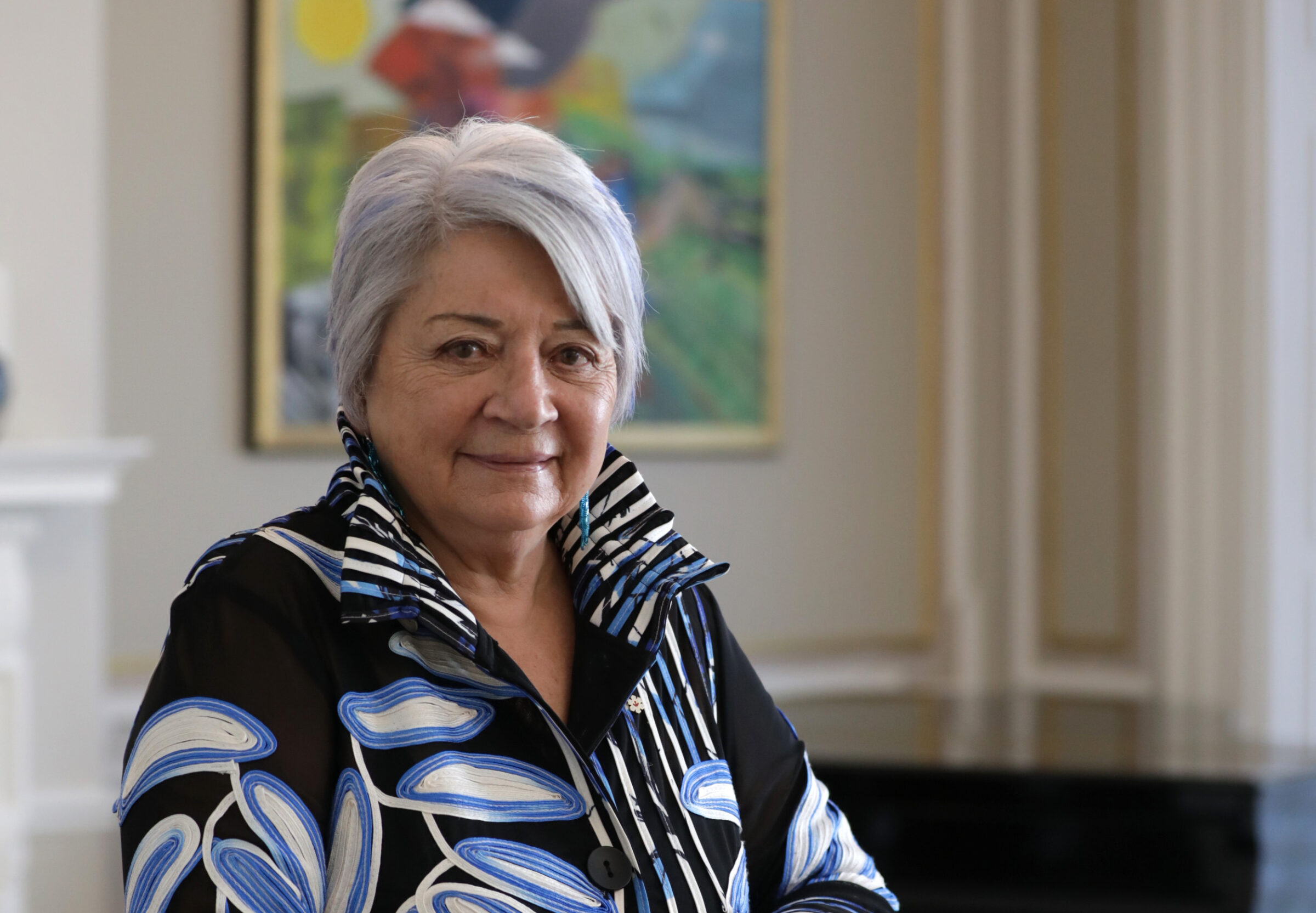
Mary Simon, Canada’s first Indigenous Governor General, will depart Rideau Hall on June 8, after a five-year term marked by reconciliation efforts and major political transitions at home and abroad. (Photo by Mike Carroccetto, special to Nunatsiaq News)

When Mary Simon was sworn in as Canada’s first Indigenous Governor General, the country was confronting a reckoning over its relationship with Indigenous Peoples.
Former prime minister Justin Trudeau announced Simon’s appointment to the role in July 2021, about a month after 751 bodies were found buried on the grounds of Cowessess First Nation in Saskatchewan.
The discovery reignited national conversations about reconciliation, inspiring Inuit Tapiriit Kanatami president Natan Obed to describe Simon as an “ideal Governor General for this place and time.”
Five years later, Simon is set to hand the office over to Louise Arbour, and she appears to have lived up to the promise.
Because of her, Canada is “more just, more inclusive, and far more committed to reconciliation,” said Prime Minister Mark Carney last week at the launch of her legacy project, Ajuinnata: The Mary Simon Catalyst for Mental Wellness.
During a speech in the Senate on Wednesday, Sen. Nancy Karetak-Lindell described Simon as a “shining light” on Canada’s path toward reconciliation and credited her with bringing Inuktitut into the country’s highest office.
“Her presence and her voice have underscored that reconciliation must include the protection, revitalization and everyday use of Indigenous languages,” Karetak-Lindell said.

On Facebook, Indigenous Services Minister Rebecca Chartrand wrote that Simon had “transformed the role” of Governor General and carried Inuit language, culture and identity “into the heart of Canadian public life.”
By the time she took office, Simon had spent more than five decades advocating for Inuit rights, Indigenous self-determination and Canada’s Arctic interests.
“My view is that reconciliation is a way of life and requires work every day,” Simon said during her 2021 installation ceremony.
Throughout her mandate, she sought to bring Indigenous perspectives into institutions that had historically excluded them.
Inuit traditions featured prominently during her installation ceremony, which included a qulliq lighting and drum dancing. She frequently delivered speeches in Inuktitut, English and French. Her personal coat of arms incorporated Inuit symbolism and carried the motto “Ajuinnata,” an Inuktitut term that means “never give up.”
Simon’s tenure also coincided with several defining moments in Canada’s recent history.

In 2022, she welcomed former Pope Francis to Canada during his visit to apologize for the Catholic Church’s role in the residential school system. That same year, she represented Canada at the funeral of Queen Elizabeth II, whose reign spanned seven decades.
Months later, Simon travelled to London for the coronation of King Charles III. Ahead of the ceremony, she arranged what she described as the first meeting between a British monarch and the leaders of the Assembly of First Nations, Inuit Tapiriit Kanatami and the Métis National Council.
Simon also greeted several foreign leaders including the former U.S. president Joe Biden and Ukrainian President Volodymyr Zelenskyy.
She oversaw change in Canada’s government too, approving Trudeau’s request to prorogue Parliament in January 2025 and welcoming Mark Carney as prime minister.
“One might say history has been keeping us gainfully employed,” Simon said during her farewell address to parliamentarians this week. “Throughout these changes, I have remained confident in the strength of our democracy, our institutions and our sovereignty.”

Mental health emerged as her defining priority, yet she also spoke about racist and misogynistic attacks directed at her and her staff, which resulted in a national symposium at Rideau Hall that focused on digital safety and online harassment.
In a recent statement, Northwest Territories Premier R.J. Simpson said Simon consistently brought northern perspectives into national conversations and reminded Canadians that “the North is a vital part of who we are as a country.”
Nunavut Premier John Main has described her as a “trailblazer” who advocated for “reconciliation within the nation, diversity and inclusion, as well as environmental stewardship.”
Simon offered her own assessment Wednesday: “As Governor General, I have sought to be a bridge builder for all Canadians.”
Easy to say when you have a blank check provided by tax payers.
She had a significant role to play as the late Queen’s and now the King’s representative in Canada. She reminded us that the North is a vital part of our country. Reconciliation and Mental Health were projects she highlighted and supported.
Show her respect and appreciation.
My favorite part of her serving her term, was the fact that she didn’t know french.
Gainfully employed? Not really in Nunavut she forgot the circumstances that plague NTI and Nunavut government !
With all the talk since forever on the language, the need to support it, finding an Inutituut language class is slim to nothing.
Why does NN feel that it has a duty to indoctrinate us with the woke hoax?
Office for five years..never once questioned claims of mass graves or genocide..never once challenged chiefs uttering threats and hate..and she advanced reconciliation? No…she was a figurehead for a government ideology, nothing more.
Enjoy your pension payouts…
Was doing well up until welcoming Volodymyr. Russia had recently hosted the World Cup and the Olympics despite Western criticism which was not warranted at all. Russian speaking Ukrainians were systematically being bombarded by fellow citizens in the western Ukraine. A western organized backed coup…
Wonderful job, Mary Simon. You represented Canada well and with grace. It was not an easy time. Thank you.