


News quiz July 25 | Conservation measures abound
How closely have you been following northern news? Find out with this quiz!
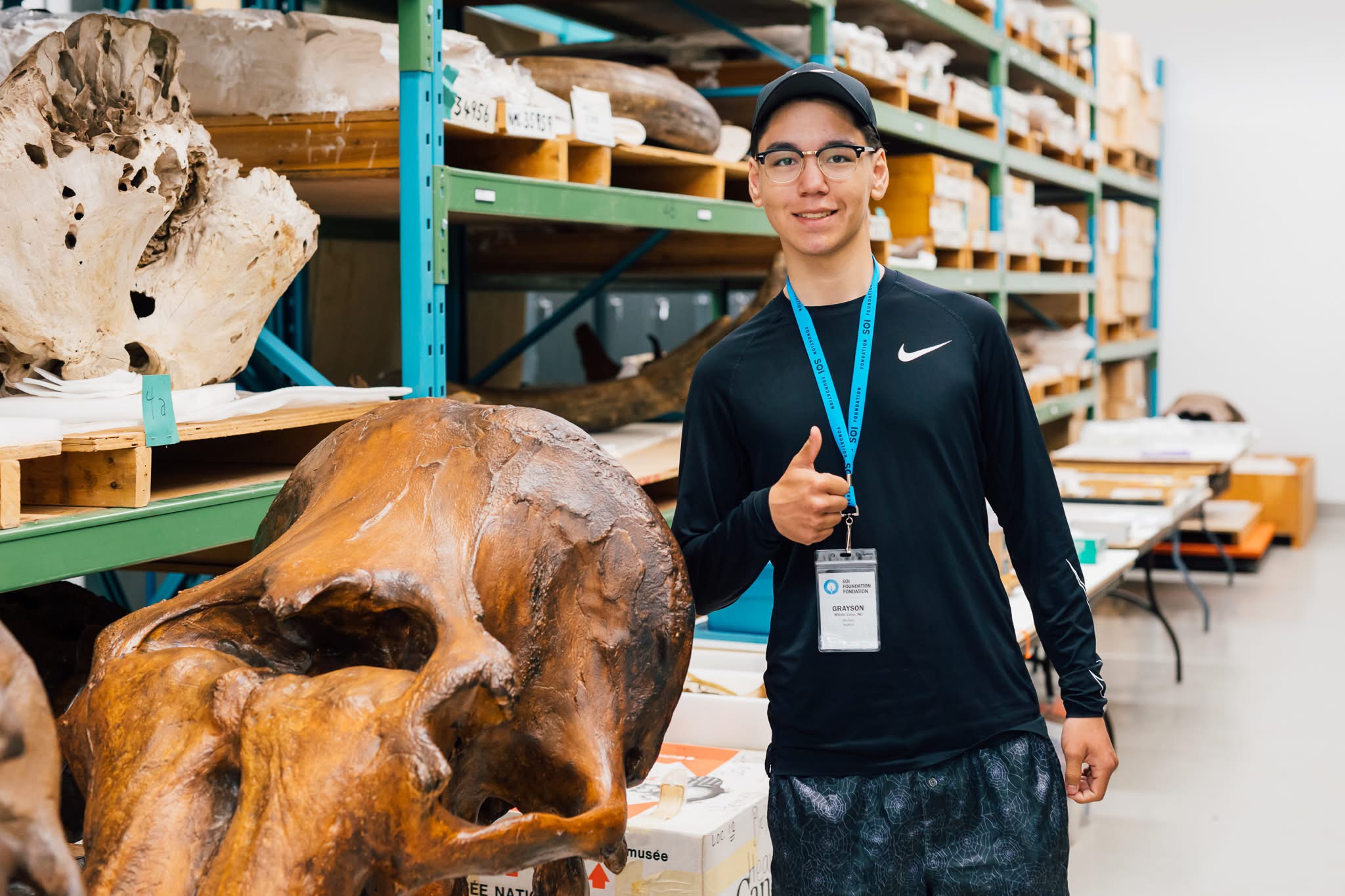
Grayson Maashi, 16, from Whale Cove is one of 60 young people taking part in the North-to-North expedition from Nuuk, Greenland, to Iqaluit. In this photo, Maashi is taking part in pre-voyage activities in Ottawa. (Photo courtesy of Students on Ice Foundation)
Sure, you’ve been reading the news, but have you really been reading the news? Check out your attention to detail with this week’s news quiz. On we go!
1. Cambridge University-based scientist Ellen Bowler used artificial intelligence to see if she could find patterns in spring and fall caribou movements across the Northwest Passage. What did she find?
A. Caribou are like lemmings. When one starts crossing, the others follow. But there is no indicator as to when the migration starts.
B. There is a “trigger” moment as the ice forms, indicating that caribou instinctively know when it’s safe to cross.
C. There is no rhyme or reason to the crossing. They go when they feel like it.
2. Iqaluit is getting a new $35.6-million, 23-unit multiplex for federal workers, with each unit estimated to cost around $1.5 million — $500,000 more than usual. Why is the average cost per unit higher?
A. The multiplex is classified as a “deluxe” project to help attract government workers. Each unit comes with a jacuzzi, plush carpeting and industrial kitchens.
B. The extra cost comes from the multiplex being constructed primarily of Canadian steel, lumber and aluminum as part of the federal initiative to bolster Canadian industry through its procurement process.
C. The builders are aiming for the project to have LEED Gold certification, which means it will have better energy efficiency and indoor air quality, and it will be built from sustainable materials.
3. A water pipe in Gjoa Haven was repaired in mid-June after the hamlet discovered a breakage in January. But residents were still being told to boil their water before consuming it this week. Why?
A. There are other problems with the water treatment plant that still need to be addressed.
B. Water samples have been sent down for testing, but the Health Department has not yet received results.
C. The water treatment plant’s tanks are dirty and the hamlet is waiting for department officials to come clean them before the water can be tested.

4. A teenager from Whale Cove is sailing across the Davis Strait this summer with Students on Ice to learn about life in other Inuit regions and different career paths in conservation and science. Why did he apply to take part in the voyage?
A. His boss encouraged him to send in an application.
B. He has always wanted to try his hand sailing the high seas.
C. He was bored with his job at the local co-op and wanted to try something different.
5. Nunavut’s Therapeutic Justice Program is expanding to a third community after seeing success in Cambridge Bay and Arviat. Where is it going next?
A. Iqaluit
B. Pangnirtung
C. Pond Inlet
Answers:
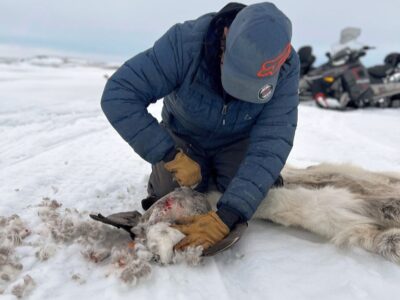
A Therapeutic Justice Program participant in Arviat practises harvesting skills he learned while participating in the program’s workshops. (Photo courtesy of Tracy May)

1. B — There appears to be a “trigger” moment during sea-ice formation that indicates when caribou start their seasonal migrations across the Northwest Passage in the spring and fall. The hope is scientists can use this data to tell ships when to stay clear of the area.
2. C — Sorry, aspiring culinary wizards: the extra cost for Iqaluit’s new multiplex isn’t going toward any luxury kitchen details. But the project will have less of an environmental impact, according to the federal government, which is funding the build.
3. C — Gjoa Haven’s water treatment plant tanks are dirty. But officials with the territorial Transportation and Infrastructure Department should be coming soon to clean them next week, said the hamlet’s senior administrative officer.
4. A — Grayson Maashi was working a job in conservation last summer, looking out for polar bears and observing wildlife management strategies, when his boss encouraged him to apply for the Students on Ice North-to-North expedition.
5. C — Pond Inlet. The goal is to roll out the program to all communities eventually. But manager Tracy May said she doesn’t want it to grow too fast. “I see many programs starting up and going too fast, too big,” she said. “We want to start introducing [therapeutic justice] gradually into one community at a time, ensuring that it becomes successful, that everyone’s trained, then moving on to the next community.”
(0) Comments