


Mary River closure would hit economy, but could be good for local hunters, says Arctic Bay resident
Company that operates iron mine seeks creditor protection for more than $1B in debt
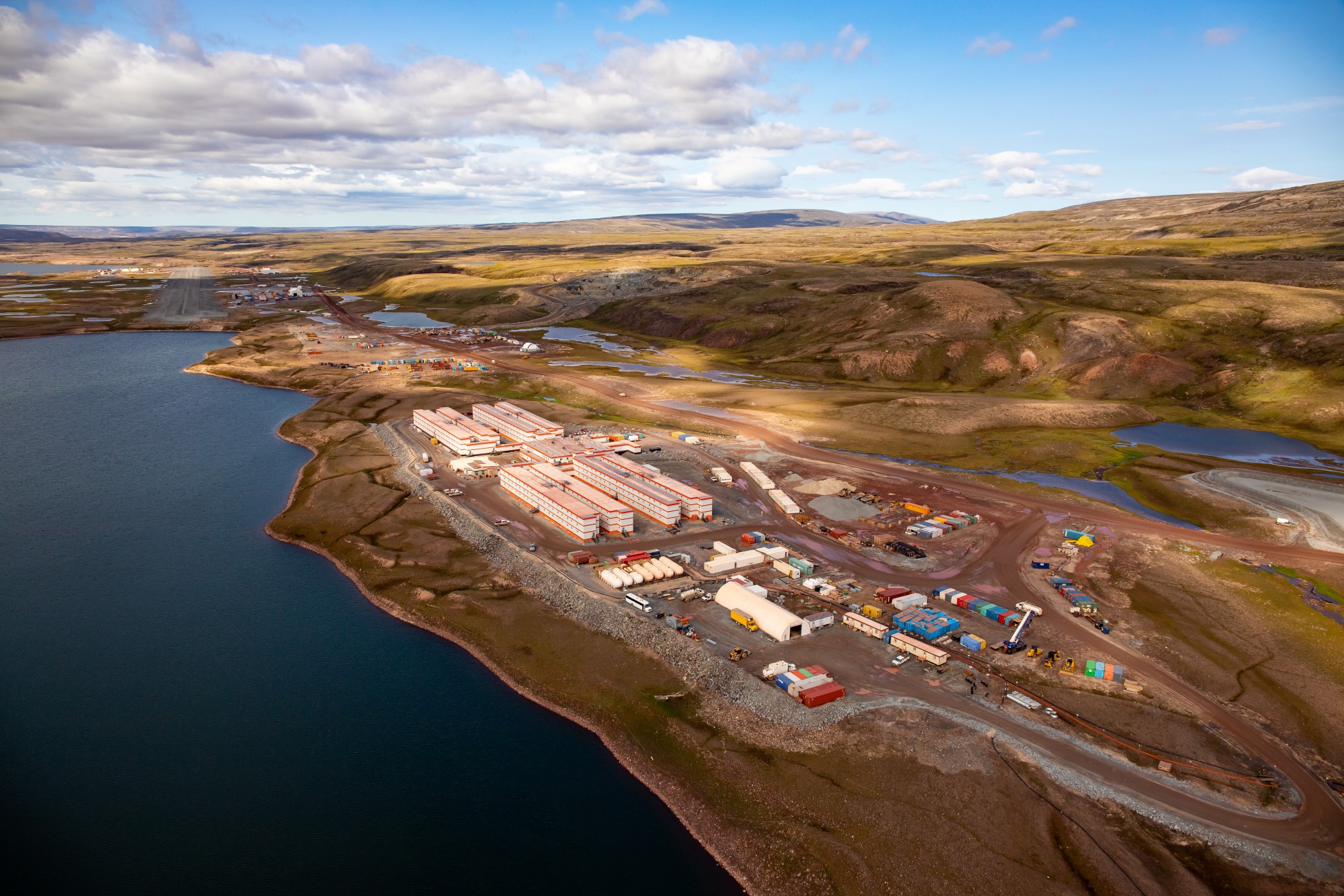
Baffinland Iron Mines Corp. is facing financial troubles that could force its Mary River mine to “cease operations,” according to court documents. (File photo)

The potential closure of Baffinland Iron Mines Corp.’s Mary River iron mine would be a “great loss” to today’s Inuit workers, but a win for “next generations” of Inuit, says Arctic Bay resident Marie Naqitarvik.
“The workers over there and their families would suffer, I know, but if [the mine] were to continue, that would be hard for our next generation and hunters,” she said Thursday in a phone interview.
The Oakville-based company is seeking creditor protection for approximately $1 billion in debt, according to Ontario Superior Court files. It has operated the Mary River iron mine, located on northern Baffin Island near Arctic Bay and Pond Inlet, since 2015.
The company’s financial problems came to light last week..
The troubles in part due to the $1.46 billion the company spent on its proposed Milne Inlet railway expansion that was ultimately rejected by the federal government. Between 2017 and 2022, Baffinland “entered into significant contracts” in anticipation of approval, according to documents filed in Ontario Superior Court of Justice.
As a result, Baffinland says it lacks the means to buy fuel before this year’s sealift shipping window closes, which may force the mine to “cease operations entirely,” court documents say.
Despite that, Baffinland expects no operational disruptions to the mine and day-to-day decisions are still being made by executives, “subject to court oversight,” said Peter Akman, the company’s spokesperson, Wednesday in an email to Nunatsiaq News.
Naqitarvik was the spokesperson for the Nuluujaat Land Guardians, a group of seven Inuit who, in 2021, blocked access to the mine for a weeklong protest of Baffinland’s proposed expansion.
For years, people in communities near the mine have said increased industrial activity in the area is driving away the animals they rely on for sustenance. These concerns are what ultimately led the federal government to reject Baffinland’s proposed expansion for Milne Inlet in 2022.
Naqitarvik said the locals observed the company expanding its infrastructure before it got the necessary approvals.
Over at the NWT and Nunavut Chamber of Mines, acting executive director Hudson Lester declined to comment on the company’s billion-dollar investment in its unapproved Milne Inlet project, saying he didn’t have the technical background to do so.
But he did say it was concerning to see the company seek creditor protection.
“You never want to see a company go through this, especially one that employs so many Inuit workers and contractors,” he said.

Baffinland is Nunavut’s largest private sector employer with 1,200 people on its payroll, including approximately 300 Inuit employees, according to court documents, and mining makes up almost half of Nunavut’s gross domestic product.
If the mine were to close, it would have an impact on the territory’s workforce and GDP, Lester said.
The Qikiqtani Inuit Association would also take a “hit” if the mine closes, Lester said.
Mary River mine sits on Inuit Owned Land and Baffinland pays $1.25 million in quarterly royalties to the Inuit association for the right to mine there.
Representatives from the Qikiqtani Inuit Association didn’t respond to a request for comment on Thursday.
Despite the mine’s troubles, Lester says he still holds an “optimistic” view of Baffinland’s future.
“I haven’t had an in-depth chat with Baffinland as of yet, just with all that’s going on, so I can’t speak to it for certain, but I’m still on the hopeful side, and on the side that things will stay as they are,” he said.
Nunavut MP Lori Idlout says she will “continue to monitor” the situation.
“The Mary River Mine is a critical part of Nunavut’s economy. It supports jobs, training opportunities, and local businesses across the Qikiqtani Region,” Idlout said in a written statement on Thursday.
In 2021, before she became a member of Parliament, Idlout was the lawyer representing the anti-Baffinland Nuluujaat Land Guardians group.
Quote, “but a win for “next generations” of Inuit”. Seriously! What is wrong with some of us. Is hunting paying the bills for the vast majority of “working” Nunavummiut’s? Is the mine going to be replaced by a food processing plant that will miraculously appear to process hunters’ hauls? The approximately 300 Nunavummiut it employs will find themselves unemployed. Trying to find work in a work deprived region. Trying to take care of their families and grow a future. Those dollar figures that are pumped into the local economy are vital and critical to the local economies. That plus the impact from the Royalites it pays which would ultimately impact all Nunavummiut.
I don’t know what it will take for people to pull their heads out of their behinds. Nunavut needs jobs. Badly. It needs companies and people to do business here. There are close to 50% of the people living below the poverty line! No one wants to say this so I will. There is no economic future or stability in hunting. That ship sailed. A large part of that way of life unfortunately is disappearing and not coming back, Mines or not. Should we try and protect existing hunting grounds? ABSOLUTELY! Should we try and protect what is left for future generations? ABSOLUTELY! Should the prospect of a large-scale businesses/employer closing down In Nunavut for the benefit of hunting be celebrated. That would be a hard NO!
You don’t have to like the mines, you don’t have to like mining (even though almost everything in and around your house and things you count on daily has products, tools and equipment (including snow machines, 4 wheelers, boats, motors, pots, pans, etc., etc., etc..) made from what that mine or other mines like it produce). What you cannot do, is pretend like it is not one of the main economic engines that drive the economy in that region and Nunavut and that someone, somehow, is going to be “better off without it. It will not happen. Not now, not in a generation.
Wise words. Also: he stuff mined here is far more environmentally responsible than the low grade stuff. beside, it is not exactly on anyones doorstep! The distance from the mine would be the envy of many elsewehere around the world. The financial and societal benefits (incomes, jobs etc) far outway anything.
But the progressive from the South are good at stirring the pot.
Work deprived you say
With all the jobs available in town with devolution happening in 2027
There are alot of jobs just look how people are willing to come up with no apartments or home for them
Inuit hunt to not make money out of it they hunt to fed their family because the price of groceries are so high so Inuit add caribou seal polarbear to their menu to off set the cost
Who said Inuit want to hunt to make money no one
Remember the country food store that ran were definitely not Inuit owned or start
Jim and Joe they were Caucasian
Only 300, I just your one of those that is 900 people that is working with them. If this is in inuktitu, you wouldn’t comment on this most of you that are gaving negative comment about inuit
Maybe the next generation won’t know how to hunt. Most of the new generation now doesn’t even know how to talk in their own language. And we can’t even go caribou hunting because of the decline. Hunting supplies costs $$$$$,cthe list goes on and on. Jobs is the only option nowadays.
Kids these days are in love with phones and iPads, they are losing their language,respect for people and they don’t want to work hard, just expand the damn mine and get to work,let Nunavut make money for it self
For you, yes but not for us.
The fact remains that this is Canada. Work a job or live a life of poverty. Take your pick.
Anyone telling you different is just blowing wind up your skirt.
The mine brings money not just to the employees but directly to the region. All benefit (or can). Living off handouts is not the way to inspire new generations – this is a massive opportunity for the region to remain viable and keep people there.
The issue of 1200 employees being laid off is overplayed. The significant majority of these are non Nunavut residents, so the territory will not get the same impact. No bigly if they shutdown for a few years so the Inuit can learn more mining skills at the other operating mines in the territory. The company screwed up and spent money that was never approved and now they are bearing the costs.
Not sure how you overplay 1200 people losing their jobs, unable to pay rent, properly feed their families, etc. Yes, ‘only’ 300 are Nunavummiut and may be the only ones you care about – although you don’t seem to care very much – but the other 900 are human beings with partners and kids, as well. ‘No biggie’ if they all lose their income? Really?
Over 300 of those employees who could be out of work are Inuit. Your attitude sucks and stinks of privilege!
If the mine shuts down, even temporarily, the statement that this will be a win for the next generations of Inuit will be put to a strong and realistic test.
The Nuluujaat Land Guardians asserted that this operation was bad for caribou. Yet, while it has been operating, the caribou on Baffin have started a strong recovery. So there is good evidence this assertion was in fact, wrong.
The Nuluujaat Land Guardians have also asserted that this operation was bad for marine mammals. If concentrate shipping were to be paused, it would therefore be an opportunity to use this change to see if this is true; by observing if marine mammal behavior and distribution changes under a shutdown scenario, or not.
The huge reduction in sea ice in Qikiqtani region due to climate change, and the presence of Killer Whales are other plausible reasons why whales are not as abundant or stay longer near affected communities.
If the whales continue to travel further to the north and west even in the absence of commercial shipping, this will prove that the Nuluujaat Land Guardians were wrong again.
However, if Qikiqtani sees more whales for longer periods of time in the absence of commercial shipping, then the negative effect of commercial shipping will be proven.
If and when the owners of this operation solve their financial woes, what the public should taking from this is some learnings to calibrate their attitudes and concerns about this project.
This would be valuable insight well worth remembering for the future.
“Nunavut MP Lori Idlout says she will “continue to monitor” the situation.”
Is she going to pretend she is anything but thrilled over this? It would be amusing if she did, but I don’t expect that will happen.
Social Assistance is free, housing rent will go to 60.00 month powe bills 10.00 month, why work, go hunting and fishing anytime, GN, NTI, and QIC will take care of us all.
Give me give me give me! No wonder my people are lazy, all they want is handouts.
Any economy that depends on mining should know that it is a boom-and-bust industry. When it busts, it leaves behind mountains of toxic waste, debt, and unemployment that are then the responsibility of government and taxes. Any remaining jobs will be in cleaning up the mess left behind.
The future of the North is not in resource extraction. It is in its people, many of whom can work remotely like anyone else if they acquire a decent education. Neither mining nor hunting can support any economy anywhere.
We say we’re poor and we need jobs but a handful of fools celebrate the potential disappearance of over 320 well paid Inuit pay checks.
We say we’re homeless but we shut down developers trying to build housing and fudge up every major housing initiative the feds spend hundreds of millions of dollars on and no one is held accountable.
We say we can’t afford food but when the feds commission an ex land claims President to deliver an independent review of nutrition north we shrug when she fails to deliver and struts off to New York.
WTF is going on?
A clear lesson for future investment in the region!
This saga will only ensure that future investors won’t bother with this region where one hurdle after another is dreamt up.
These are patient investors who have put much on the line, (with ZERO return incedently as they believed in the long term), where promissed all sorts along the way and rewarded with constant hurdles.
Hyperbole like “the money goes elsewhere” do the rounds, whereas the truth is, the only payments have been local (in addition to suppliers and employees of course).
Other stories about leaving the cleanup for others to sort up are also Fake News; these things are these days regulated and guarantees firmly in place to deal with that. (not that there is much to cleanup given it is pure rock and no processing)
Sad , shortsightedness and various groups out for an extra buck may have graver consequences for the region than many seem to realise.
So give yourselves a big pat on the back. All the opposition obstruction standoffs finally paid off and the result being many of your friends and family could be unemployed. HAPPY NOW.
in debt? from what and how exaclty? so inuit are blamed? canadian government, agreed and now blaming? what a lame, im glad my grandpa didnt tell governments, that he used to saw gold somewhere in toundra, he used to bring 5 to 10oz gold and put them back where he saw, he used to say, thats not ours, thats the lands gems, from 90’s to 00’s, land is still good for hunting, cant say where cuz he used to walk community to community, somewhere in nunavik, too bad i dont know where location because he only share location 1 person but doesnt remember where, the exact location is
It’s astounding how many anonymous comments ignore the broader reality. Follow the logic: one group has been conditioned by GNWT/GN Education systems, where every community depends on chlorinated water systems and plastic storage tanks — long-term chemical exposure normalized in the name of survival. Add poverty, dependence on social assistance, addiction, housing insecurity, and political apathy, and you create generations deprived of true self-determination.
Meanwhile, organizations and political elites claim to represent Inuit interests while communities struggle with alcohol abuse, tobacco addiction, youth self-harm, and collapsing infrastructure. Environmental activism often frames mining as the enemy, yet mining also brought monitoring, jobs, and economic participation to regions otherwise neglected. Narwhal populations, once labeled endangered, were later found to be increasing, but fear-based narratives persist while real crises go ignored.
The contradiction is glaring: leaders travel internationally championing causes while many Inuit remain trapped in survival mode, unable to build wealth, opportunity, or independence. Conservation groups won’t pay mortgages, create generational wealth, or solve the housing crisis. Communities still need fuel, steel, skidoos, hunting equipment, and jobs to survive in the modern North.
At the same time, local environmental failures — leaking landfills, untreated waste, polluted rivers — receive little attention compared to symbolic activism. The loudest voices often speak on behalf of Inuit without living the realities they claim to defend.
This isn’t about rejecting culture or conservation. It’s about asking who truly benefits while communities continue struggling with poverty, addiction, hopelessness, and dependency. Real self-determination requires economic strength, accountability, and honesty about the social collapse unfolding in plain sight.