

Islamic Society to get relief on Iqaluit tax bill
City council votes to reduce group’s property tax burden from 2023 and 2024
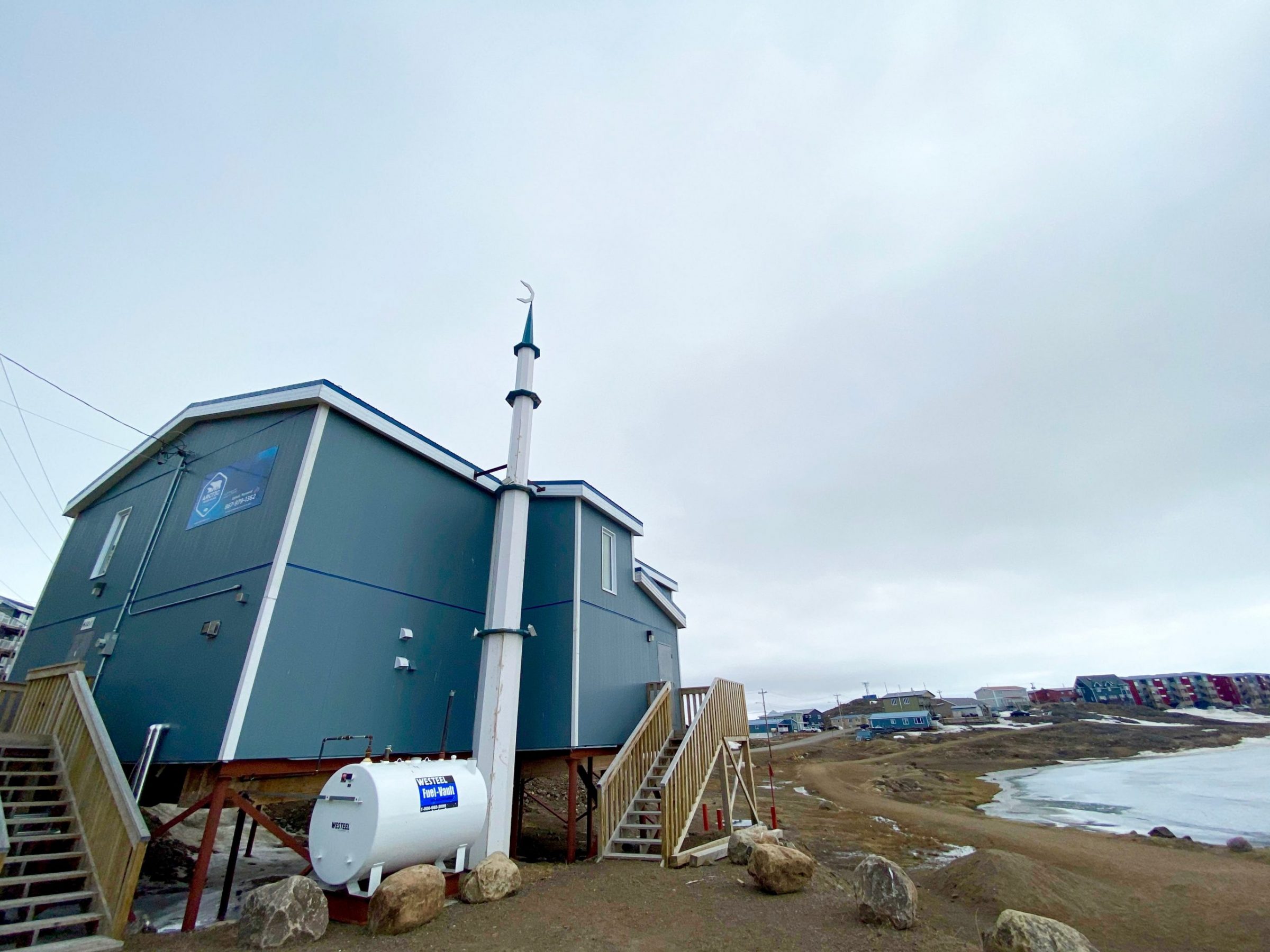
The Islamic Society of Nunavut will receive property tax relief after Iqaluit city council voted in favour of the measure last week. (File photo)
The Islamic Society of Nunavut will get relief on its property taxes, following a unanimous vote by Iqaluit city council at its Nov. 26 meeting.
Religious institutions are not exempt from paying municipal property taxes in Iqaluit, unlike most jurisdictions in the rest of Canada.
In 2022, Iqaluit amended its property tax bylaw for churches and religious groups to make them subject to the taxes.
The move was in response to the discovery in 2021 of 751 suspected unmarked graves at the Marieval Indian Residential School about 160 kilometres east of Regina.
Churches could still apply for a 75 per cent reduction in their property tax, but they had to apply to the city to receive it. But churches are no longer eligible to apply for these reductions after 2024 though, because of a new amendment to the bylaw passed in January.
The Islamic Society was not aware it had to apply for reductions in 2023 and 2024, which is why its leadership decided to apply now, said Peter Tumilty, the city’s finance director, at the Nov. 12 finance committee meeting.
The amount it requested was about $17,000 per year, Tumilty said.

After applying the 75 per cent reduction to the society’s annual tax bill of $68,000, the organization will pay the city approximately $34,000 for the tax years 2023 and 2024 combined.
Other religious institutions in the city are also struggling under the weight of property taxes.
St. Jude’s Anglican Cathedral is in danger of closing under the stress of its increasing debt. The church owes $64,000 in property taxes, coupled with a yearly $188,000 insurance bill and other debts.
St. Jude’s applied for and received the 75 per cent reduction for the 2023 and 2024 tax years.
Representatives from the Islamic Society of Nunavut could not be reached for comment.
I sincerely hope they get all the tax relief possible. I see what they have done for Iqaluit. Feeding the needy and looking past the obvious reasons why. Thanks!
I agree that the parts of these properties that are used to feed the needy (e.g. the two food banks) or provide other charity to the general population should be tax exempt. However, the worship spaces should not get any specific consideration as they are there for the benefit of congregation members rather than the general public.
Back when everyone was, or was expected to be, either an Anglican or Catholic and to attend mass, tax exemptions made sense since the worship spaces were there for the benefit of the general population. However, in today’s world many people don’t identify with religion and even more don’t attend mass so a full tax exemption doesn’t make any sense. If a group of people want to have a space for doing any activity other than charity, they should shoulder the costs associated with that, including taxes. Any tax exemption is a tax on everyone else, since the missing money has to come from somewhere.
What is the big news here? They followed the rules, applied and got it what they qualified for.
Yet all these rich taxi drivers are not paying taxes and not even giving change to passengers
Booooo. If you want to be religious, do it on your own dime. That’s $102,000 out of the pockets of regular ratepayers.
Nothing is coming out of your pocket here.
So the Anglicans might lose their building because of Mayor and council’s petty prejudices but the Islamic society gets a free pass?
So, you didn’t even try to skim the article, eh? They applied for tax relief from 2023 and 2024.
Regarding the Anglican Church, “St. Jude’s applied for and received the 75 per cent reduction for the 2023 and 2024 tax years.”
Anglicans got the exact same tax break as the Islamic Society. In fact, because the Anglican igloo building is so needlessly big and bloated, they may have cost the city even more money..
They both got a 75% reduction.
Practically every municipality in Canada offers a complete tax exemption for churches and places of worship. Even a partial tax on these places makes Iqaluit an outlier in Canada. But, when it comes to Iqaluit being an outlier, what else is new I suppose….
This article reminded me of how some of the craziness, and reactionary decision making of the mayor Bell years still reverberates to today. I wonder if Mr. Bell now looks back on that decision to tax places of worship, his knee jerk outrage that prompted it, and how misguided he was knowing what everyone knows now. Who knows…..
Iqaluit decided that in light of the murder of Inuit at the hands of the Catholic Church that religious groups didn’t deserve a tax break.
Good decision.
Rules for thee but not for me! Any one else tired of these double standards?
It’s time for the city to overturn the legislation passed under Kenny Bell’s erratic rule and exempt places of worship from taxation. The legislation was passed as a knee-jerk reaction to an announcement in another province about the presumed presence of unmarked graves at a former residential school, a presumption that was subsequently not proven. Reverse the legislation.