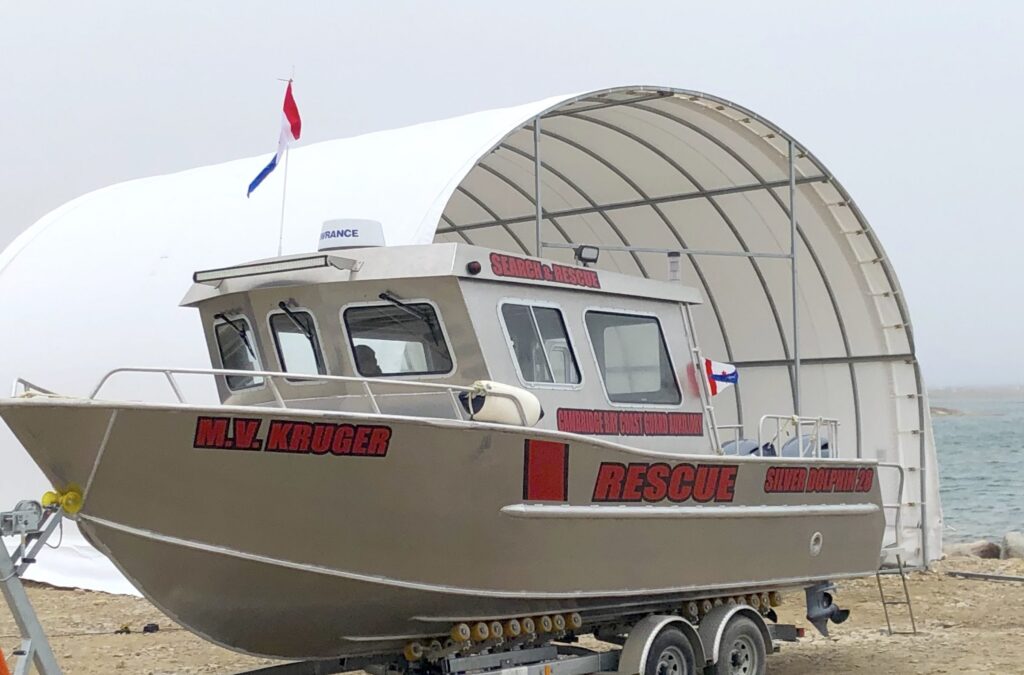
Three communities in Nunavik will receive money from the federal government to acquire boats and equipment for their participation in local marine safety, including a rescue boat for Kangiqsualujjuaq, similar to this one in Cambridge Bay. (File photo by Jeff Pelletier)
Money to be used to purchase boats and boat-related equipment
The federal government plans to spend close to $2 million to upgrade marine response capabilities in five Indigenous communities, including three in Nunavik.
Peter Qumaq pauses to pose for a photo as he gathers refundable recycling in Iqaluit during a snowy afternoon on Thursday. He says it takes about three hours to amass a worthwhile number of cans to bring in for a refund. Beer cans net 10 cents per can when redeemed at Northern Collectibles on Ulu Lane. (Photo by Daron Letts)
Workers remove Iqaluit’s floating docks from the harbour on Thursday morning. Nunavut’s Department of Transportation advised boaters last week to remove their vessels from the docks by Oct. 20 so dock-removal work could begin the following day. However, the work was later postponed due to weather. The docks are being removed for the season as temperatures in Iqaluit begin to drop below freezing. (Photo by Arty Sarkisian)
One lonely iceberg floats on the water near Iqaluit. It was visible west of Long Island in Frobisher Bay for much of a cloudy and windy Thursday in the Nunavut capital. Iqaluit could be in for rain on Oct. 19 as the temperature is expected to rise to 3 C, according to Environment and Climate Change Canada. (Photo by Jeff Pelletier)
Caleb Fretter, a nurse in Naujaat, photographed this bowhead whale skull a few hundred metres from the hamlet after hunters told him where to look. Residents told him the skull was from one of four whales whose meat had been harvested and the carcasses sent back to sea to prevent the scent of blood from attracting polar bears. “I had seen the skulls via photograph in a museum in Pangnirtung last fall, and at the time I had wondered at how incredible it would be to see them in person,” Fretter said. (Photo courtesy of Caleb Fretter)