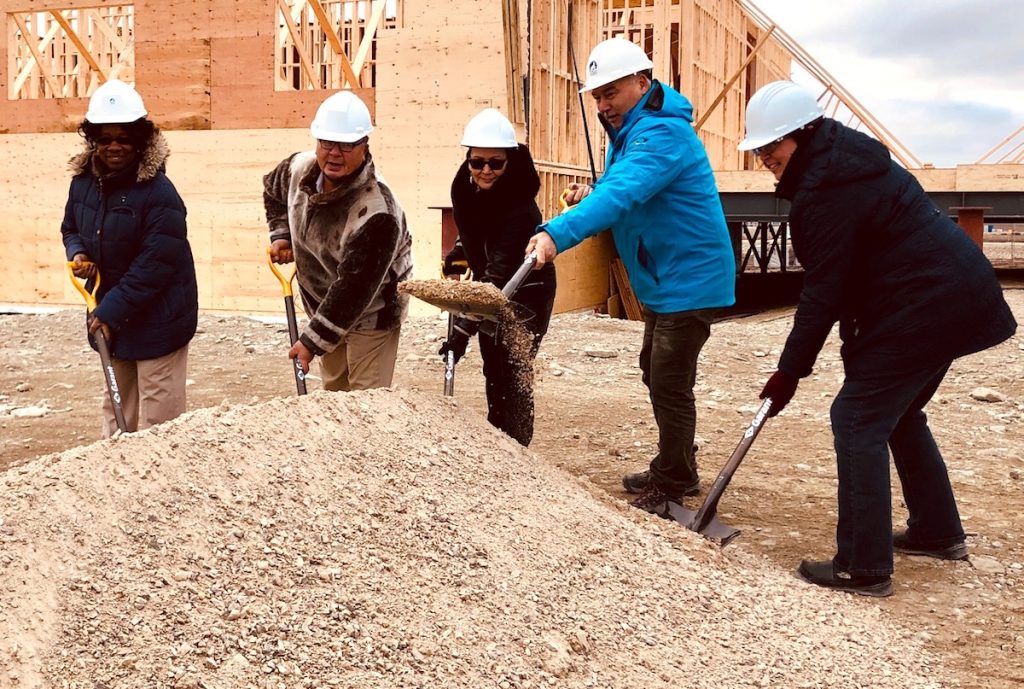
It’s a go for the new $40-million Nunavut Arctic College campus in Cambridge Bay. Participating in a groundbreaking ceremony Oct. 2, from left: Agnes Olowokere, the Kitikmeot region’s NAC representative; Patterk Netser, the minister responsible for the NAC; Cambridge Bay MLA Jeannie Ehaloak; Premier Joe Savikataaq and Fiona Buchan-Corey, dean at Cambridge Bay’s NAC campus. “Having a new facility to work from makes a difference, physically and emotionally,” Ehaloak said. The new building should be finished in 2020. (Photo by Jane George)
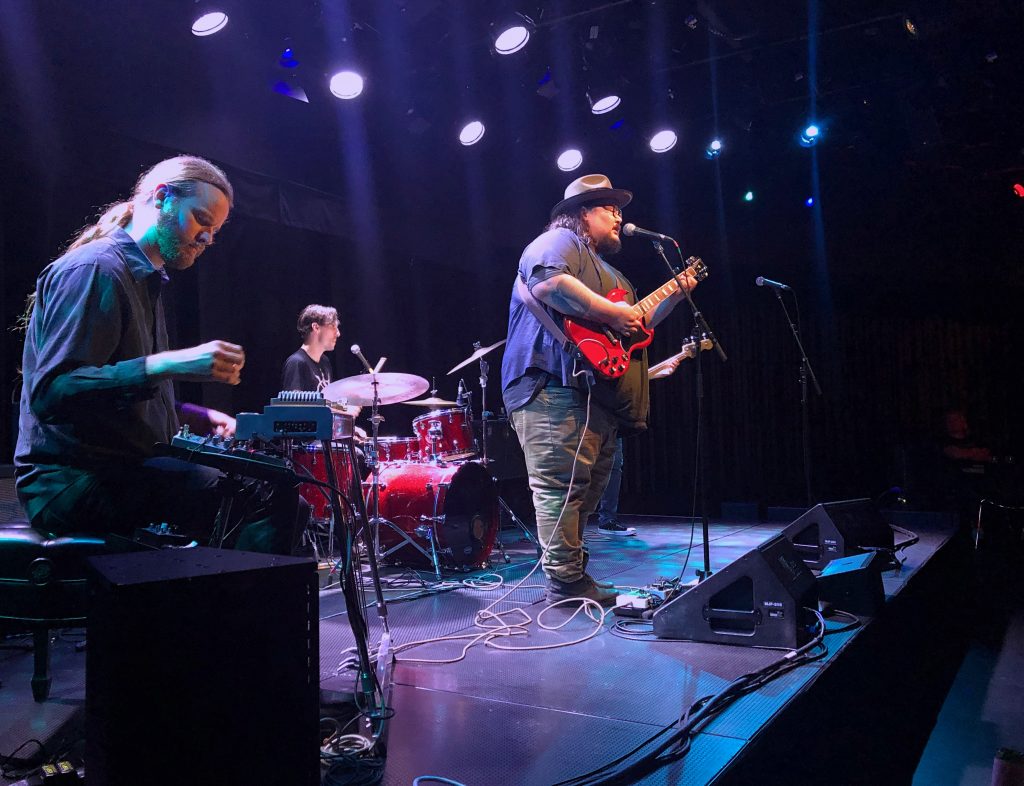
Josh Q and the Trade-offs own the stage at their sold-out show at the National Arts Centre in Ottawa on Friday, Sept. 27. The Arctic soul band did not disappoint, even when Josh Qaumariaq’s guitar string broke during the first few songs. “As you can see, I’m having a good night already,” Qaumariaq joked. “I don’t need that string. Until the second set.” The audience was filled with family and friends, including Qaumariaq’s mom and a cousin Qaumariaq hadn’t met before. “So cool to have so many people I know here,” he said. “Thanks for coming, guys.” The band played as part of Mòshkamo, Ottawa’s Indigenous arts festival, which celebrated the debut of the centre’s Indigenous Theatre. (Photo by Kahlan Miron)
Riit (centre) performs as part of Mòshkamo, an Indigenous arts festival by Ottawa’s National Arts Centre, on Saturday, Sept. 28. Riit and her partner, Alexia (right), led their audience through a night of Arctic electropop, complete with throat singing and Inuktitut lyrics. The two artists even had a throat singing competition—using their fighter names, “Riit the Rock” and “Alexia Anaconda”—and led the two halves of the audience to sing against each other after a quick lesson. Riit opened the concert with the song “Ataataga,” a word that means “my father,” which is also the title of her upcoming album. “I always open the set with that song to honour him,” she said. “He’s a huge part of the reason that I’m doing what I am today.” (Photo by Nadia Kharyati/NAC)
Welcome to the “fifth region” of Inuit Nunangat. At the Tungasuvvingat Inuit annual general meeting in Ottawa on Friday, Sept. 27, TI president Kaajuk Kablalik and executive director Jason LeBlanc said they estimate that around 40 per cent of Inuit in Canada now live in urban and southern regions. TI now serves that population with more than 20 programs, and by the end of the year will employ more than 100 people. (Photo by Jim Bell)
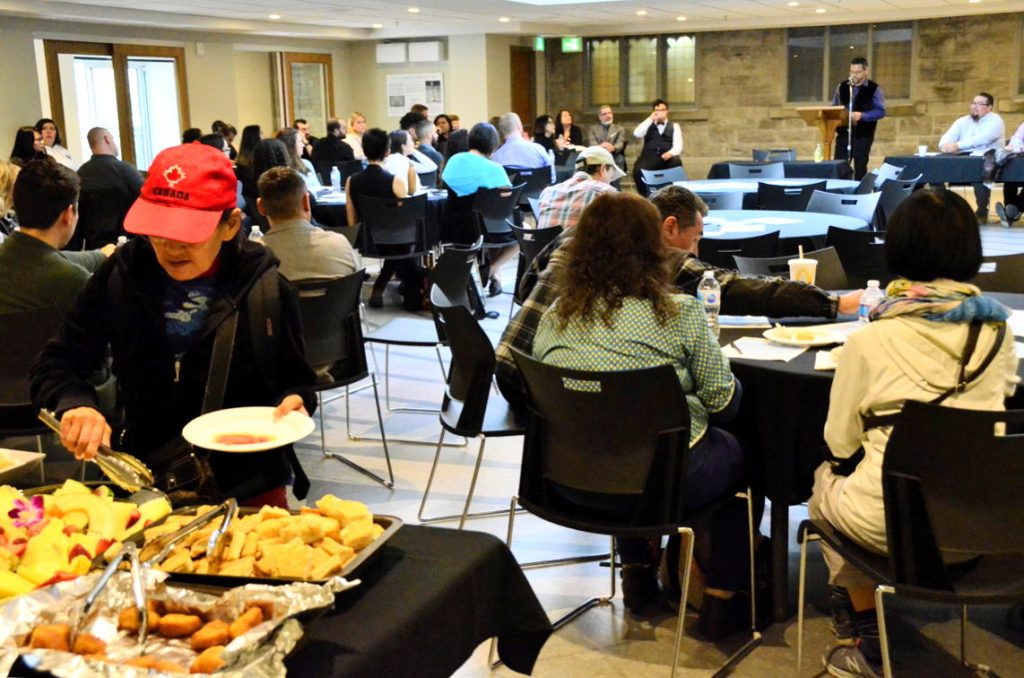
Brittany Hesmer and Malaya Rheaume give a presentation on Tungasuvvingat Inuit’s new regional cancer program on Friday, Sept. 27, at the organization’s annual general meeting in Ottawa. They said they’ve just completed a smoking cessation program and plan future activities related to nutrition, screening for cancer among Inuit and Inuit-specific cancer research. TI estimates that southern and urban Inuit now comprise about 40 per cent of the Inuit population in Canada. That rapid growth means TI is growing rapidly also. In 2018-19, the organization employed 83 people with revenues running to about $8.7 million. In about eight weeks, their employee roster will jump to 105 people. (Photo by Jim Bell)